Description:
Editorial Reviews
Excerpt. © Reprinted by permission. All rights reserved.
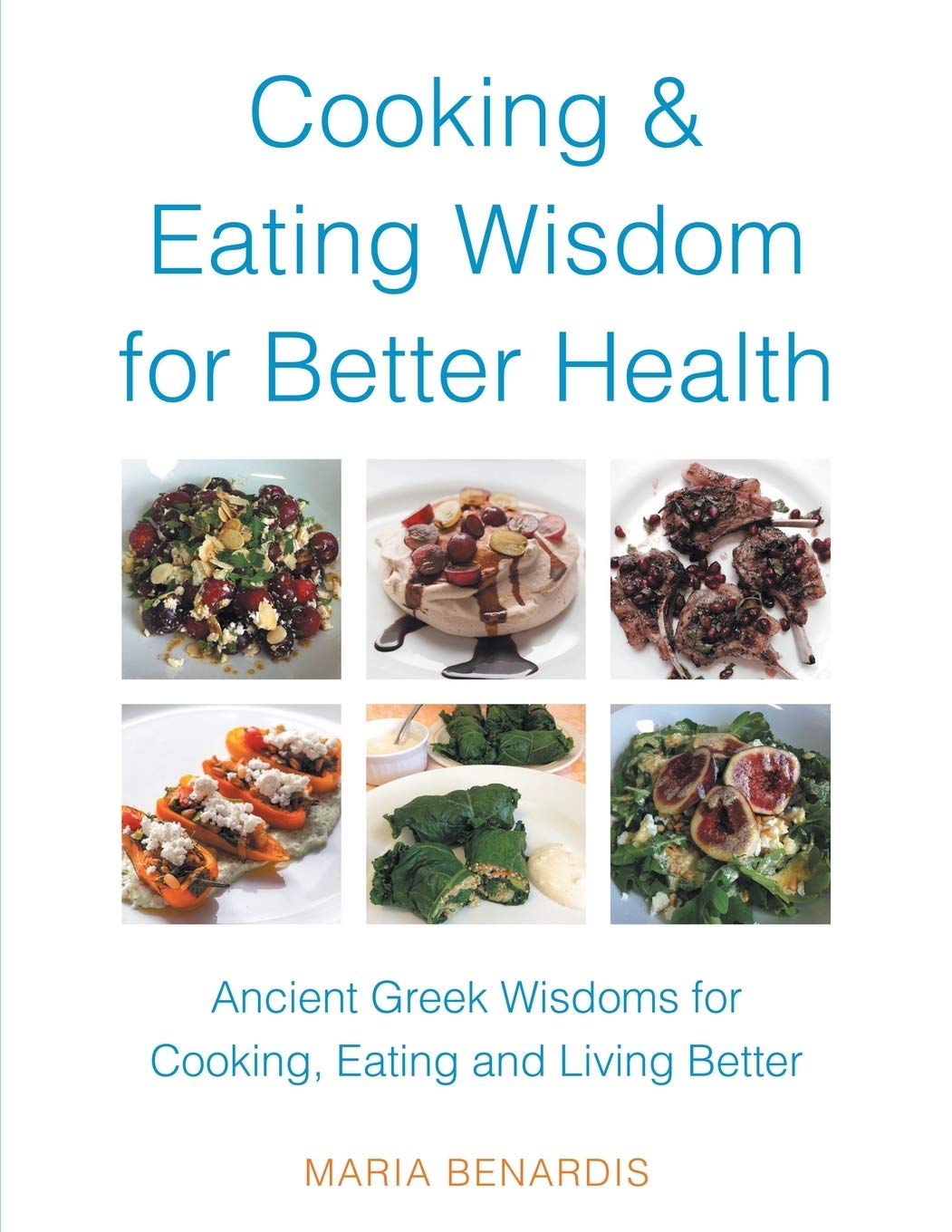
Cooking & Eating Wisdom for Better Health
How the Wisdom of Ancient Greece Can Lead to a Longer Life
By MARIA BENARDISBalboa Press
Copyright © 2013 Maria BenardisAll rights reserved.
ISBN: 978-1-4525-7454-7
Contents
Introduction...............................................................ivPart 1: The Wisdom of Ancient Greece in the Kitchen........................1Chapter 1 The Most Important Ingredient is Agapi...........................2Chapter 2 Adopt the Use of Wholesome Ingredients and Make ConsciousChoices....................................................................8Chapter 3 Listen to Your Inner Voice.......................................12Chapter 4 Everything in Moderation and in Harmony..........................17Chapter 5 Discover Harmony and Simplicity in the Kitchen with Music and
Colours....................................................................21Chapter 6 Spiritually Connect with Your Senses When Cooking................27Chapter 7 An Absence of Judgement..........................................30Chapter 8 All in Good Time and Season......................................32Chapter 9 Eat with Peace, Calm and Joy.....................................36Chapter 10 Have Faith and Gratitude........................................41Part 2: Some of the Healing Ingredients of Greece & Recipes................46Acknowledgements...........................................................143Disclaimer.................................................................144Metrics Conversions........................................................145
CHAPTER 1
The Most Important Ingredient is Agapi
Love is the cause of unity of all things. — Aristotle
Love that shines from within cannot be darkened by obstacles of the world of consequences! – Pythagoras
Only food cooked with good energy and agapi can truly nourish and heal our bodies and souls. The presenceof the heart over the presence of the mind is necessary when cooking from a place of joy. If you put love inyour cooking you will give love to yourselves and others. Love conquers all. — Maria Benardis
The energy we emit when cooking or eating affects the ingredients and others around us. Ourenergy can rejuvenate or contaminate. When we cook and eat lovingly the ingredients will heal usand the people around us will respond accordingly with reciprocity. - Maria Benardis
The Greek word for love is agapi, which is a deep sense of true love, with no expectations. Unfortunately, wehave developed distorted views about what love is today and have placed too many conditions, judgementsand limitations on what love means and how it should be expressed.
Agapi is a joyous, harmonious state of mind, free of chaos. Whenever I ask my friends whose cooking they likethe most, their mum's cooking comes up most of the time. Mum's cooking will always be the best becausea mother loves her children unconditionally and therefore everything they cook and touch is made withbountiful pots of love and good energy.
In the Greek Orthodox faith agapi also denotes an unconditional love for God. Love was important in ancientGreece, so much so that they assigned a goddess to remind everyone of its importance — Aphrodite. Shewas the goddess who radiated love and whose example we should follow and lead by. The Romans imitatedthe Greeks and followed suit by adopting the goddess and calling her Venus, along with all the other ancientGreek gods.
Aphrodite, it was believed, sprang from an oyster and is where food of aphrodisiac qualities eventuated from(the oyster is included as one such food). This is an example of the association Greeks developed betweenthe gods and nature: the energy of Aphrodite with the natural oyster. The ancient Greeks created many godsto represent many things in nature to remind us that we are not alone and that we have godly guidance andexamples to look up to. There were also many in ancient Greece that believed otherwise and were of theopinion that there was only one God. Nowadays, the Greeks have adopted one God as part of the GreekOrthodox faith.
The ancient Greeks believed that the purpose of love was to unify things. When you cook with love, all thingscome together in the kitchen. Your recipes work out and it brings you great joy and happiness. When youcook with stress or anger, you become separated and disconnected. The result is that your dish is unlikely towork out and you will be unhappy. We ultimately choose whether we go into the kitchen with an action oflove or an action of anger. Under the rule of agapi, all is in harmony; everything comes together into a singlestable sphere and all the elements and energy are of equal proportions. In the end love conquers all and it isthe solution to everything. It is this state of mind that leads to health and happiness.
The ancient Greek philosophers recognised that the universe was circular, symmetrical and harmonious andso for human beings to coexist in this universe they had to achieve balance and peace. This was sometimesreferred to as 'cosmic equilibrium': a oneness with all. In his work Timaeus, when Plato refers to time as'a moving image of eternity', he is hinting at something very similar. Athenaeus also shared this view andbelieved that the earth is circular and that energy moves in a circular motion — the energy flow is neverendingand we are all connected. Athenaeus believed that this was deliberate:
... spherical in shape and deriving mental images from the shape of the sun and the moon, thought it wasonly right to make the things pertaining to their own, food like the element which encompasses the earth,according to the shape it seemed to have. Hence they made the table round; also the tripods consecrated tothe gods they made circular and covered with the stars and (round) cakes also which they call 'moons'. Soalso they called a loaf Artos because among geographical shapes, the circle is perfectly even and complete.Hence, too the cup, which contains liquid food, they made circular in imitation of the universe. ButNestor's cup is even more characteristic. For it has stars also, which the poet likens to studs, because starsare round just as nails are and are fastened to the sky as Aratus says of them.
This theory of circular energy was incorporated into the ancient Greek kitchen, in other areas of the homeand in day-to-day living. For example, the Greeks had circular ovens, tables, cups, frying pans, saucepans,plates, utensils, cakes, breads, jewellery, furniture, home and theatre designs. This continues today in modernGreece. There was also attention to the way food was stirred and mixed — clockwise (the same flow as timeflows; forward not backwards). The opposite would encourage negative energy to enter. The past is the pastand good energy looks to the present and the future. This action was deliberate because they were aware ofthe power of good energy and its benefits to their health. A circle is perfectly even and complete. Positiveenergy flows in a circular direction and never ends very much like a positive story that never ends. This, inturn, ensured that love continued to flow throughout the meal. As Epicurus, the philosopher would say "Livetoday. Forget the cares of the past!"
After reading this ancient Greek philosophy I became more awakened and conscious of the circular shapein nature and my surroundings. I observed how the moon, sun, human faces and most fruit and vegetablestake on a fully or partial circular shape. Most living organisms take on the circular energy flow, which isbalanced and whole. The ancient Greeks believed that God used this delineation of the universe deliberatelyto attain a oneness with the cosmos: one cosmos with infinite energy, infinite gratitude, infinite possibilities,infinite ideas for recipes and infinite ways of doing things. There is no right way of cooking — what worksfor you is the right way.
With agapi comes positive thoughts and good feelings. With agapi comes enthusiasm; an enthusiasm to cook.God provided us with the one great power that is, the gift of being able to control our thoughts. Thoughts andfeelings cannot be overlooked when designing one's approach to good health, longevity and the regenerationof the body. As Hippocrates said, 'medicine is woven into the stuff of the mind'. A thought is just that — athought — there is no action attached to it unless we give the thought enough attention so it comes tofruition. A thought has energy attached to it. If you are thinking happy thoughts when cooking then you arecirculating positive energy in your kitchen to everything around you, including your ingredients. You willfeel content, happy, loving, optimistic and blissful. Our feelings are our guidance system.
When cooking it is important to be mindful of our energy and how we are feeling before we go into thekitchen. When we are not feeling good and at peace then our energy is not harmonious and joyous, which canlead to imbalances in our emotional, physical and spiritual self. The energy in our food is directly related toour spiritual and physical wellbeing. It will also affect others who consume the food we cook. It is thereforevital to take care when cooking so that we share love, harmony and good health. These are the most importantingredients to bring into your kitchen when cooking.
We do not eat merely to top-up the energy fuel tank in our bodies and for our physical wellbeing. We eat toheal our spirit and to nourish the soul. With agapi thoughts ill health cannot coexist. The ingredients we useto create a dish are central to the energy we give to our cooking. The ancient Greeks were aware that foodand its energy influenced the balance in one's wellbeing — a philosophy many cultures have forgotten inmodern times. Cooking is about nurturing our bodies and souls, and incorporating humor, laughter and songinto the process. This practice was prevalent in ancient Greece and continues today in Greece. Pythagorassaid, "Laughter is an infallible index to character, and no amount of dissimulation can render agreeable the laugh of anill-disposed man." Laughter energises the spirit. Only food cooked with good energy and love and laughtercan truly nourish and heal our bodies and souls. Have you ever cooked when:
— You were worried or fearful that the recipe would not turn out? No recipe is perfect because it is notwritten specifically for you or your energy in mind. There is no need to worry when cooking, simply changeany recipe to meet your taste and needs and it will always be a success. As Epictetus said, 'There is onlyone way to happiness and that is to cease worrying about things which are beyond the power of our will'.Replace fear with faith.
— You were stressed or running late? Does it really matter if things are running a little late? Observe howslow snails travel and yet they always reach their destination.
— You had a bad day at work or were too tired too cook? Why not order take-away or dine out in a restaurantinstead?
All these situations are not creating a happy environment to cook in. These experiences are also not bringinggood positive and harmonious energy into your kitchen.
Inner balance and agapi cannot coexist with worry, stress, anger, frustration, fear, anxiety and competitiveness.These feelings or experiences do not create good feelings or good energy when cooking. They also disturbyour senses so that you are not in tune with the spiritual connection of cooking or yourself. You are onlyfeeling negative emotions and disharmony, which can lead to ill health in the long-term. Ultimately, weare responsible for our health and wellbeing, so it is important to substitute fear with faith. Make cooking ahappy and joyous occasion. Change your mood by playing your favourite music. Remind yourself that youare cooking to nourish your soul and to replenish the energy and harmony of your mind and body. It's atime to celebrate life.
We are not able to cook in a healing way when our ego is in action. When ego gets in the way our instinctsare switched off, we lose our spiritual guidance system and we end up cooking with an unloving heart. Whenone comes from a place of ego or believes they know everything they will never acquire understanding andthe wisdom they require from God. As the Greek philosopher Epictetus explained, 'If a man would pursuePhilosophy, his first task is to throw away conceit. For it is impossible for a man to begin to learn what he hasa conceit that he already knows'. When you cook with ego, there is an absence of the key ingredient — love— from our food. Ego and love cannot coexist. Ego separates us from the universe and other beings.
Worry only about the things you can control and let the universe worry about the rest. Trust that the answerswill come to you. Do not let any past experience with a dish dictate how it is going to turn out when youcook it again. There are no mistakes when cooking, only experiences and discoveries. Forgive yourself forany past errors in judgement — no one is perfect. Laugh it off and move on to your next cooking adventure.And do not cook when you are in a bad mood or not feeling well, your senses are out of balance and theywill affect the outcome of the dish.
When you cook for your friends or family, it's important to be in a happy frame of mind. Since ancienttimes, texts have pointed out that the vibration of the cook's feelings affects the quality of the food. This iswhy it's ideal to eat home-cooked meals whenever possible. If you do choose to eat out, make sure it is at anestablishment that respects how food is prepared and served. Opt for restaurants where you can see the kitchenand how the staff are cooking the dishes. Eat at restaurants that value their customers by using organicallygrown ingredients and methods that respect the environment. Ensure they use good oils, such as extra virginolive oil, because they care about your health and, in turn, are showing respect for people's wellbeing.
It is also important to create a cheerful mood when cooking. Dance, play some music, sing, or do as I do andget a tambourine and play a song. Let your inner child come out once in a while and don't take cooking tooseriously. Pleasure and joy from cooking can be obtained when there is humour involved. Epicureans calledthis 'ataraxia' — the highest pleasure that can be achieved with oneself.
In ancient Greece cooking and recipes took on humour. Cooking was not a chore but a joyous occasion verymuch like watching a play. Athenaeus shares with us a humorous extract from Crates in Wild Beasts: 'Fish!Get over here! But I am not roasted on the other side yet. Then turn yourself over, baste yourself, and sprinkleon some salt! For to quote Sophocles "a chorus of mute fish were shouting their approval by wagging theirtails not at their mistress, but at the casserole-dishes".'
The Greeks also had a feeling of agapi towards their ingredients, so much so that they assigned to many ofthem meaning and stories. This was almost a reminder to people of how plants and animals also had energyand that they were interconnected. For example, the ancient Greeks associated the quince with fertility, andit played an important role in wedding celebrations where it was offered as a gift, used to sweeten the bride'sbreath before entering the bridal chamber, and shared by the bride and groom. These associations haveresulted in the quince becoming known as the 'fruit of love, marriage and fertility'. The pomegranate was alsoconsidered a sacred fruit symbolising fertility, love and death. It was one of the main symbols of Aphrodite,the goddess of love. In ancient Greek mythology, the pomegranate was known as the 'fruit of the dead', anideal that still continues today. When the Greeks commemorate the dead, they make kolliva, which consistsof boiled wheat and almonds mixed together with sugar and raisins and decorated with pomegranate seeds.
Your energy and the way you feel will also be affected by the surroundings in your kitchen. To keep apeaceful, uninterrupted flow of energy, a kitchen needs to be organised and clean. When you commencecooking and are unable to find ingredients this can cause a sudden panic and disrupt the peaceful flow ofenergy. It disorganises you and you take on that feeling. An organised kitchen means you are able to findwhat you need quickly when it's time to make a meal. Organise your spice rack in a simple and organisedway so that you find the right spice for your recipes. Be thoughtful and loving about how you store youringredients so that they maintain their good energy and nutritional value. For example, store olive oil in adark cupboard away from any direct light. This will ensure that it does not go rancid. Respect and look afteryour ingredients as you would respect and look after yourself.
The removal of clutter is also important. Clutter can add confusion so that the mind cannot think clearly andfind simple solutions for recipes. Declutter your fridge so that you are able to find things and so that your foodremains fresh and your ingredients have the same breathing space that you require in your life. Nowadays wewaste too much good food because we are not organised and simply do not store items appropriately.
Cleanliness is also of utmost importance in the kitchen, especially for our health. All sorts of bacteria andtoxins may be present that can make us ill and unhappy. Clean all your surfaces regularly. White vinegarwith some lemon juice does the trick. If you are cooking with conventional ingredients wash the ingredientswell. Rinse all your fruit and vegetables thoroughly. You do not know who has handled them before youand what their hygiene was like. I also bless my ingredients and say a little prayer to remove any negative'impact imprint' that may have been left by anyone that has handled the ingredients before me. Wash themin a generous amount of water with some diluted white vinegar. This will remove some of the toxins.
Add some colourful, fun and beautiful utensils and appliances in your kitchen. Create a pleasant and happyenvironment. This all adds to a happy cooking experience. Cooking needs to be fun and enjoyable. In Socrateswords, 'the unexamined life is not worth living'. Get out of your comfort zone, try new cuisines and newcombinations of food. Find the courage to challenge yourself and the way cooking could be.
(Continues...)Excerpted from Cooking & Eating Wisdom for Better Health by MARIA BENARDIS. Copyright © 2013 Maria Benardis. Excerpted by permission of Balboa Press.
All rights reserved. No part of this excerpt may be reproduced or reprinted without permission in writing from the publisher.
Excerpts are provided by Dial-A-Book Inc. solely for the personal use of visitors to this web site.
Details:
Visit the Balboa Press Store
Cooking & Eating Wisdom for Better Health: Ancient Greek Wisdoms for Cooking, Eating and Living Better
BHD2607
Quantity:
Order today to get by 7-14 business days
This item qualifies for free delivery
 Imported From: United States
At BOLO, we work hard to ensure the products you receive are new, genuine, and sourced from reputable suppliers.
Every product in the BOLO catalogue is sourced through our Verified Global Supply Network of verified sellers, authorized distributors or directly from the manufacturer.
Each product undergoes thorough inspection and verification at our consolidation and fulfilment centers to ensure it meets our strict authenticity and quality standards before being shipped and delivered to you.
If you ever have concerns regarding the authenticity of a product purchased from us, please contact Bolo Support. We will review your inquiry promptly and, if necessary, provide documentation verifying authenticity or offer a suitable resolution.
Your trust is our top priority, and we are committed to maintaining transparency and integrity in every transaction.
While we strive to display accurate information, variations in packaging, labeling, instructions, or formulation may occasionally occur due to regional differences or supplier updates. For detailed or manufacturer-specific information, please contact the brand directly or reach out to BOLO Support for assistance.
Unless otherwise stated, all prices displayed on the product page include applicable taxes and import duties.
BOLO operates in accordance with the laws and regulations of Bahrain. Any items found to be restricted or prohibited for sale within the Bahrain will be cancelled prior to shipment. We take proactive measures to ensure that only products permitted for sale in Bahrain are listed on our website.
All items are shipped by air, and any products classified as “Dangerous Goods (DG)” under IATA regulations will be removed from the order and cancelled.
All orders are processed manually, and we make every effort to process them promptly once confirmed. Products cancelled due to the above reasons will be permanently removed from listings across the website.
More from this brand
Similar items from “Mental & Spiritual Healing”
Share with
Or share with link
https://www.bolo.bh/products/U1452574545
Visit the Balboa Press Store
Cooking & Eating Wisdom for Better Health: Ancient Greek Wisdoms for Cooking, Eating and Living Better
BHD2607
Quantity:
Order today to get by 7-14 business days
This item qualifies for free delivery
Imported From: United States
At BOLO, we work hard to ensure the products you receive are new, genuine, and sourced from reputable suppliers.
Every product in the BOLO catalogue is sourced through our Verified Global Supply Network of verified sellers, authorized distributors or directly from the manufacturer.
Each product undergoes thorough inspection and verification at our consolidation and fulfilment centers to ensure it meets our strict authenticity and quality standards before being shipped and delivered to you.
If you ever have concerns regarding the authenticity of a product purchased from us, please contact Bolo Support. We will review your inquiry promptly and, if necessary, provide documentation verifying authenticity or offer a suitable resolution.
Your trust is our top priority, and we are committed to maintaining transparency and integrity in every transaction.
While we strive to display accurate information, variations in packaging, labeling, instructions, or formulation may occasionally occur due to regional differences or supplier updates. For detailed or manufacturer-specific information, please contact the brand directly or reach out to BOLO Support for assistance.
Unless otherwise stated, all prices displayed on the product page include applicable taxes and import duties.
BOLO operates in accordance with the laws and regulations of Bahrain. Any items found to be restricted or prohibited for sale within the Bahrain will be cancelled prior to shipment. We take proactive measures to ensure that only products permitted for sale in Bahrain are listed on our website.
All items are shipped by air, and any products classified as “Dangerous Goods (DG)” under IATA regulations will be removed from the order and cancelled.
All orders are processed manually, and we make every effort to process them promptly once confirmed. Products cancelled due to the above reasons will be permanently removed from listings across the website.
Description:
Editorial Reviews
Excerpt. © Reprinted by permission. All rights reserved.
Cooking & Eating Wisdom for Better Health
How the Wisdom of Ancient Greece Can Lead to a Longer Life
By MARIA BENARDISBalboa Press
Copyright © 2013 Maria BenardisAll rights reserved.
ISBN: 978-1-4525-7454-7
Contents
Introduction...............................................................ivPart 1: The Wisdom of Ancient Greece in the Kitchen........................1Chapter 1 The Most Important Ingredient is Agapi...........................2Chapter 2 Adopt the Use of Wholesome Ingredients and Make ConsciousChoices....................................................................8Chapter 3 Listen to Your Inner Voice.......................................12Chapter 4 Everything in Moderation and in Harmony..........................17Chapter 5 Discover Harmony and Simplicity in the Kitchen with Music and
Colours....................................................................21Chapter 6 Spiritually Connect with Your Senses When Cooking................27Chapter 7 An Absence of Judgement..........................................30Chapter 8 All in Good Time and Season......................................32Chapter 9 Eat with Peace, Calm and Joy.....................................36Chapter 10 Have Faith and Gratitude........................................41Part 2: Some of the Healing Ingredients of Greece & Recipes................46Acknowledgements...........................................................143Disclaimer.................................................................144Metrics Conversions........................................................145
CHAPTER 1
The Most Important Ingredient is Agapi
Love is the cause of unity of all things. — Aristotle
Love that shines from within cannot be darkened by obstacles of the world of consequences! – Pythagoras
Only food cooked with good energy and agapi can truly nourish and heal our bodies and souls. The presenceof the heart over the presence of the mind is necessary when cooking from a place of joy. If you put love inyour cooking you will give love to yourselves and others. Love conquers all. — Maria Benardis
The energy we emit when cooking or eating affects the ingredients and others around us. Ourenergy can rejuvenate or contaminate. When we cook and eat lovingly the ingredients will heal usand the people around us will respond accordingly with reciprocity. - Maria Benardis
The Greek word for love is agapi, which is a deep sense of true love, with no expectations. Unfortunately, wehave developed distorted views about what love is today and have placed too many conditions, judgementsand limitations on what love means and how it should be expressed.
Agapi is a joyous, harmonious state of mind, free of chaos. Whenever I ask my friends whose cooking they likethe most, their mum's cooking comes up most of the time. Mum's cooking will always be the best becausea mother loves her children unconditionally and therefore everything they cook and touch is made withbountiful pots of love and good energy.
In the Greek Orthodox faith agapi also denotes an unconditional love for God. Love was important in ancientGreece, so much so that they assigned a goddess to remind everyone of its importance — Aphrodite. Shewas the goddess who radiated love and whose example we should follow and lead by. The Romans imitatedthe Greeks and followed suit by adopting the goddess and calling her Venus, along with all the other ancientGreek gods.
Aphrodite, it was believed, sprang from an oyster and is where food of aphrodisiac qualities eventuated from(the oyster is included as one such food). This is an example of the association Greeks developed betweenthe gods and nature: the energy of Aphrodite with the natural oyster. The ancient Greeks created many godsto represent many things in nature to remind us that we are not alone and that we have godly guidance andexamples to look up to. There were also many in ancient Greece that believed otherwise and were of theopinion that there was only one God. Nowadays, the Greeks have adopted one God as part of the GreekOrthodox faith.
The ancient Greeks believed that the purpose of love was to unify things. When you cook with love, all thingscome together in the kitchen. Your recipes work out and it brings you great joy and happiness. When youcook with stress or anger, you become separated and disconnected. The result is that your dish is unlikely towork out and you will be unhappy. We ultimately choose whether we go into the kitchen with an action oflove or an action of anger. Under the rule of agapi, all is in harmony; everything comes together into a singlestable sphere and all the elements and energy are of equal proportions. In the end love conquers all and it isthe solution to everything. It is this state of mind that leads to health and happiness.
The ancient Greek philosophers recognised that the universe was circular, symmetrical and harmonious andso for human beings to coexist in this universe they had to achieve balance and peace. This was sometimesreferred to as 'cosmic equilibrium': a oneness with all. In his work Timaeus, when Plato refers to time as'a moving image of eternity', he is hinting at something very similar. Athenaeus also shared this view andbelieved that the earth is circular and that energy moves in a circular motion — the energy flow is neverendingand we are all connected. Athenaeus believed that this was deliberate:
... spherical in shape and deriving mental images from the shape of the sun and the moon, thought it wasonly right to make the things pertaining to their own, food like the element which encompasses the earth,according to the shape it seemed to have. Hence they made the table round; also the tripods consecrated tothe gods they made circular and covered with the stars and (round) cakes also which they call 'moons'. Soalso they called a loaf Artos because among geographical shapes, the circle is perfectly even and complete.Hence, too the cup, which contains liquid food, they made circular in imitation of the universe. ButNestor's cup is even more characteristic. For it has stars also, which the poet likens to studs, because starsare round just as nails are and are fastened to the sky as Aratus says of them.
This theory of circular energy was incorporated into the ancient Greek kitchen, in other areas of the homeand in day-to-day living. For example, the Greeks had circular ovens, tables, cups, frying pans, saucepans,plates, utensils, cakes, breads, jewellery, furniture, home and theatre designs. This continues today in modernGreece. There was also attention to the way food was stirred and mixed — clockwise (the same flow as timeflows; forward not backwards). The opposite would encourage negative energy to enter. The past is the pastand good energy looks to the present and the future. This action was deliberate because they were aware ofthe power of good energy and its benefits to their health. A circle is perfectly even and complete. Positiveenergy flows in a circular direction and never ends very much like a positive story that never ends. This, inturn, ensured that love continued to flow throughout the meal. As Epicurus, the philosopher would say "Livetoday. Forget the cares of the past!"
After reading this ancient Greek philosophy I became more awakened and conscious of the circular shapein nature and my surroundings. I observed how the moon, sun, human faces and most fruit and vegetablestake on a fully or partial circular shape. Most living organisms take on the circular energy flow, which isbalanced and whole. The ancient Greeks believed that God used this delineation of the universe deliberatelyto attain a oneness with the cosmos: one cosmos with infinite energy, infinite gratitude, infinite possibilities,infinite ideas for recipes and infinite ways of doing things. There is no right way of cooking — what worksfor you is the right way.
With agapi comes positive thoughts and good feelings. With agapi comes enthusiasm; an enthusiasm to cook.God provided us with the one great power that is, the gift of being able to control our thoughts. Thoughts andfeelings cannot be overlooked when designing one's approach to good health, longevity and the regenerationof the body. As Hippocrates said, 'medicine is woven into the stuff of the mind'. A thought is just that — athought — there is no action attached to it unless we give the thought enough attention so it comes tofruition. A thought has energy attached to it. If you are thinking happy thoughts when cooking then you arecirculating positive energy in your kitchen to everything around you, including your ingredients. You willfeel content, happy, loving, optimistic and blissful. Our feelings are our guidance system.
When cooking it is important to be mindful of our energy and how we are feeling before we go into thekitchen. When we are not feeling good and at peace then our energy is not harmonious and joyous, which canlead to imbalances in our emotional, physical and spiritual self. The energy in our food is directly related toour spiritual and physical wellbeing. It will also affect others who consume the food we cook. It is thereforevital to take care when cooking so that we share love, harmony and good health. These are the most importantingredients to bring into your kitchen when cooking.
We do not eat merely to top-up the energy fuel tank in our bodies and for our physical wellbeing. We eat toheal our spirit and to nourish the soul. With agapi thoughts ill health cannot coexist. The ingredients we useto create a dish are central to the energy we give to our cooking. The ancient Greeks were aware that foodand its energy influenced the balance in one's wellbeing — a philosophy many cultures have forgotten inmodern times. Cooking is about nurturing our bodies and souls, and incorporating humor, laughter and songinto the process. This practice was prevalent in ancient Greece and continues today in Greece. Pythagorassaid, "Laughter is an infallible index to character, and no amount of dissimulation can render agreeable the laugh of anill-disposed man." Laughter energises the spirit. Only food cooked with good energy and love and laughtercan truly nourish and heal our bodies and souls. Have you ever cooked when:
— You were worried or fearful that the recipe would not turn out? No recipe is perfect because it is notwritten specifically for you or your energy in mind. There is no need to worry when cooking, simply changeany recipe to meet your taste and needs and it will always be a success. As Epictetus said, 'There is onlyone way to happiness and that is to cease worrying about things which are beyond the power of our will'.Replace fear with faith.
— You were stressed or running late? Does it really matter if things are running a little late? Observe howslow snails travel and yet they always reach their destination.
— You had a bad day at work or were too tired too cook? Why not order take-away or dine out in a restaurantinstead?
All these situations are not creating a happy environment to cook in. These experiences are also not bringinggood positive and harmonious energy into your kitchen.
Inner balance and agapi cannot coexist with worry, stress, anger, frustration, fear, anxiety and competitiveness.These feelings or experiences do not create good feelings or good energy when cooking. They also disturbyour senses so that you are not in tune with the spiritual connection of cooking or yourself. You are onlyfeeling negative emotions and disharmony, which can lead to ill health in the long-term. Ultimately, weare responsible for our health and wellbeing, so it is important to substitute fear with faith. Make cooking ahappy and joyous occasion. Change your mood by playing your favourite music. Remind yourself that youare cooking to nourish your soul and to replenish the energy and harmony of your mind and body. It's atime to celebrate life.
We are not able to cook in a healing way when our ego is in action. When ego gets in the way our instinctsare switched off, we lose our spiritual guidance system and we end up cooking with an unloving heart. Whenone comes from a place of ego or believes they know everything they will never acquire understanding andthe wisdom they require from God. As the Greek philosopher Epictetus explained, 'If a man would pursuePhilosophy, his first task is to throw away conceit. For it is impossible for a man to begin to learn what he hasa conceit that he already knows'. When you cook with ego, there is an absence of the key ingredient — love— from our food. Ego and love cannot coexist. Ego separates us from the universe and other beings.
Worry only about the things you can control and let the universe worry about the rest. Trust that the answerswill come to you. Do not let any past experience with a dish dictate how it is going to turn out when youcook it again. There are no mistakes when cooking, only experiences and discoveries. Forgive yourself forany past errors in judgement — no one is perfect. Laugh it off and move on to your next cooking adventure.And do not cook when you are in a bad mood or not feeling well, your senses are out of balance and theywill affect the outcome of the dish.
When you cook for your friends or family, it's important to be in a happy frame of mind. Since ancienttimes, texts have pointed out that the vibration of the cook's feelings affects the quality of the food. This iswhy it's ideal to eat home-cooked meals whenever possible. If you do choose to eat out, make sure it is at anestablishment that respects how food is prepared and served. Opt for restaurants where you can see the kitchenand how the staff are cooking the dishes. Eat at restaurants that value their customers by using organicallygrown ingredients and methods that respect the environment. Ensure they use good oils, such as extra virginolive oil, because they care about your health and, in turn, are showing respect for people's wellbeing.
It is also important to create a cheerful mood when cooking. Dance, play some music, sing, or do as I do andget a tambourine and play a song. Let your inner child come out once in a while and don't take cooking tooseriously. Pleasure and joy from cooking can be obtained when there is humour involved. Epicureans calledthis 'ataraxia' — the highest pleasure that can be achieved with oneself.
In ancient Greece cooking and recipes took on humour. Cooking was not a chore but a joyous occasion verymuch like watching a play. Athenaeus shares with us a humorous extract from Crates in Wild Beasts: 'Fish!Get over here! But I am not roasted on the other side yet. Then turn yourself over, baste yourself, and sprinkleon some salt! For to quote Sophocles "a chorus of mute fish were shouting their approval by wagging theirtails not at their mistress, but at the casserole-dishes".'
The Greeks also had a feeling of agapi towards their ingredients, so much so that they assigned to many ofthem meaning and stories. This was almost a reminder to people of how plants and animals also had energyand that they were interconnected. For example, the ancient Greeks associated the quince with fertility, andit played an important role in wedding celebrations where it was offered as a gift, used to sweeten the bride'sbreath before entering the bridal chamber, and shared by the bride and groom. These associations haveresulted in the quince becoming known as the 'fruit of love, marriage and fertility'. The pomegranate was alsoconsidered a sacred fruit symbolising fertility, love and death. It was one of the main symbols of Aphrodite,the goddess of love. In ancient Greek mythology, the pomegranate was known as the 'fruit of the dead', anideal that still continues today. When the Greeks commemorate the dead, they make kolliva, which consistsof boiled wheat and almonds mixed together with sugar and raisins and decorated with pomegranate seeds.
Your energy and the way you feel will also be affected by the surroundings in your kitchen. To keep apeaceful, uninterrupted flow of energy, a kitchen needs to be organised and clean. When you commencecooking and are unable to find ingredients this can cause a sudden panic and disrupt the peaceful flow ofenergy. It disorganises you and you take on that feeling. An organised kitchen means you are able to findwhat you need quickly when it's time to make a meal. Organise your spice rack in a simple and organisedway so that you find the right spice for your recipes. Be thoughtful and loving about how you store youringredients so that they maintain their good energy and nutritional value. For example, store olive oil in adark cupboard away from any direct light. This will ensure that it does not go rancid. Respect and look afteryour ingredients as you would respect and look after yourself.
The removal of clutter is also important. Clutter can add confusion so that the mind cannot think clearly andfind simple solutions for recipes. Declutter your fridge so that you are able to find things and so that your foodremains fresh and your ingredients have the same breathing space that you require in your life. Nowadays wewaste too much good food because we are not organised and simply do not store items appropriately.
Cleanliness is also of utmost importance in the kitchen, especially for our health. All sorts of bacteria andtoxins may be present that can make us ill and unhappy. Clean all your surfaces regularly. White vinegarwith some lemon juice does the trick. If you are cooking with conventional ingredients wash the ingredientswell. Rinse all your fruit and vegetables thoroughly. You do not know who has handled them before youand what their hygiene was like. I also bless my ingredients and say a little prayer to remove any negative'impact imprint' that may have been left by anyone that has handled the ingredients before me. Wash themin a generous amount of water with some diluted white vinegar. This will remove some of the toxins.
Add some colourful, fun and beautiful utensils and appliances in your kitchen. Create a pleasant and happyenvironment. This all adds to a happy cooking experience. Cooking needs to be fun and enjoyable. In Socrateswords, 'the unexamined life is not worth living'. Get out of your comfort zone, try new cuisines and newcombinations of food. Find the courage to challenge yourself and the way cooking could be.
(Continues...)Excerpted from Cooking & Eating Wisdom for Better Health by MARIA BENARDIS. Copyright © 2013 Maria Benardis. Excerpted by permission of Balboa Press.
All rights reserved. No part of this excerpt may be reproduced or reprinted without permission in writing from the publisher.
Excerpts are provided by Dial-A-Book Inc. solely for the personal use of visitors to this web site.
Details:
More from this brand
Similar items from “Mental & Spiritual Healing”
Share with
Or share with link
https://www.bolo.bh/products/U1452574545