Description:
Editorial Reviews
Review
"Perhaps the most profound and right-on-dead-center narrative I have read in a decade. These musings are uncannily brilliant in the way they refresh our sense of the already-hackneyed term sustainability. This book engages readers as if they are in active dialogue with a great mind and are being asked to think as deeply and passionately as the writer."―Gary Paul Nabhab, Gary Paul Nabhab
"Holthaus offers a powerful case that we have ruptured the intimate bond between the health of humankind and the natural world, and that reconnecting the two may be one of our last chances for a viable future."―Garrit Voggesser, Garrit Voggesser
"Learning Native Wisdom teaches that we are all 'native' to the earth. This wisdom is not exotic, primitive, or 'other' but is embedded in the ancient, practical daily lifeways passed down for millennia by all our ancestors―functional, sustainable (ethical), and broadly spiritual. Developed world societies are also subsistence cultures, at the moment locked into hunting and gathering the shirinking resource oil. With wisdom comes gratitude, manners, and care for creation. Holthaus quotes a farmer friend who says. 'No use talking about sustainable agriculture if you don't have a sustainable culture.' This book is just what we need. It is deeply informed by Gary Holthaus's many years of teaching and working in the Alaskan bush."―Gary Snyder, Gary Snyder
"Gary Holthaus shows us with infinite care how our desire for sustainability in many dimensions―agriculture, environment, economy, to name a few―can never be achieved without the support of a sustainable culture. Drawing on age-old wisdom, he argues that subsistence, sustainability, and spirituality must go hand in hand if we are to make our lives and our world healthy and whole. Without romanticizing traditional cultures, he uses their experiences to demonstrate that we humans at one time lived in this world in more sustainable ways and that, knowing this, we have the possibility to do so again."―David D. Chrislip, David D. Chrislip
"Holthaus illuminates the sharp distinctions between the long-term view taken by Native peoples regarding the connection between nature and humans, and the 'immediate return' goals of the U.S. economy, exemplified by our 'frantic hunt for the last barrel of oil.'"―Deborah Donovan, Booklist
"Holthaus's collection of essays is a pleasant immersion in the environmental philosophy of Native American (mainly Alaskan, in this case) ways of life and belief that contrast so vividly with the consumerist culture that permeates today's world."―Choice
"This is story-telling as learned from [Holthaus's] Indian and Eskimo friends and mentors in Alaska, with a brilliance that is refreshing because it is rooted in experience. Anyone interested in sustainability will find this book engaging and different."―Craig Gerlach, Agricultural History
"For Holthaus, the 'spiritual task' is to learn to love the universe, including all the creation and the destruction, the health and the disease. Holthaus does a wonderful job of communicating this task throughout Learning Native Wisdom, as he describes how engagements in the continual effort of creating a sustainable culture require that humans learn to tell each other stories, learn to love the universe, learn to practice self-cultivation, and learn to participate in the relationship and reciprocity that entwine humans and the natural world."―Worldviews: Environment Culture Religion
"[Holthaus] challenges [readers] to be mindful of their words, to shape them according to a larger vision of the sorts of persons they wish to be."―Agricultural Environment Ethics
"With the foundational stories of many spiritual belief systems and the work of certain spiritual leaders, Holthaus assesses how traditional and non-traditional spiritual belief systems might exist in contemporary culture." ―Hilary B. Booker, Department of Environmental Studies, Antioch University
About the Author
Gary Holthaus is the author of several books, including From the Farm to the Table: What All Americans Need to Know about Agriculture and Wide Skies: Finding a Home in the West.
Details:
Visit the University Press of Kentucky Store
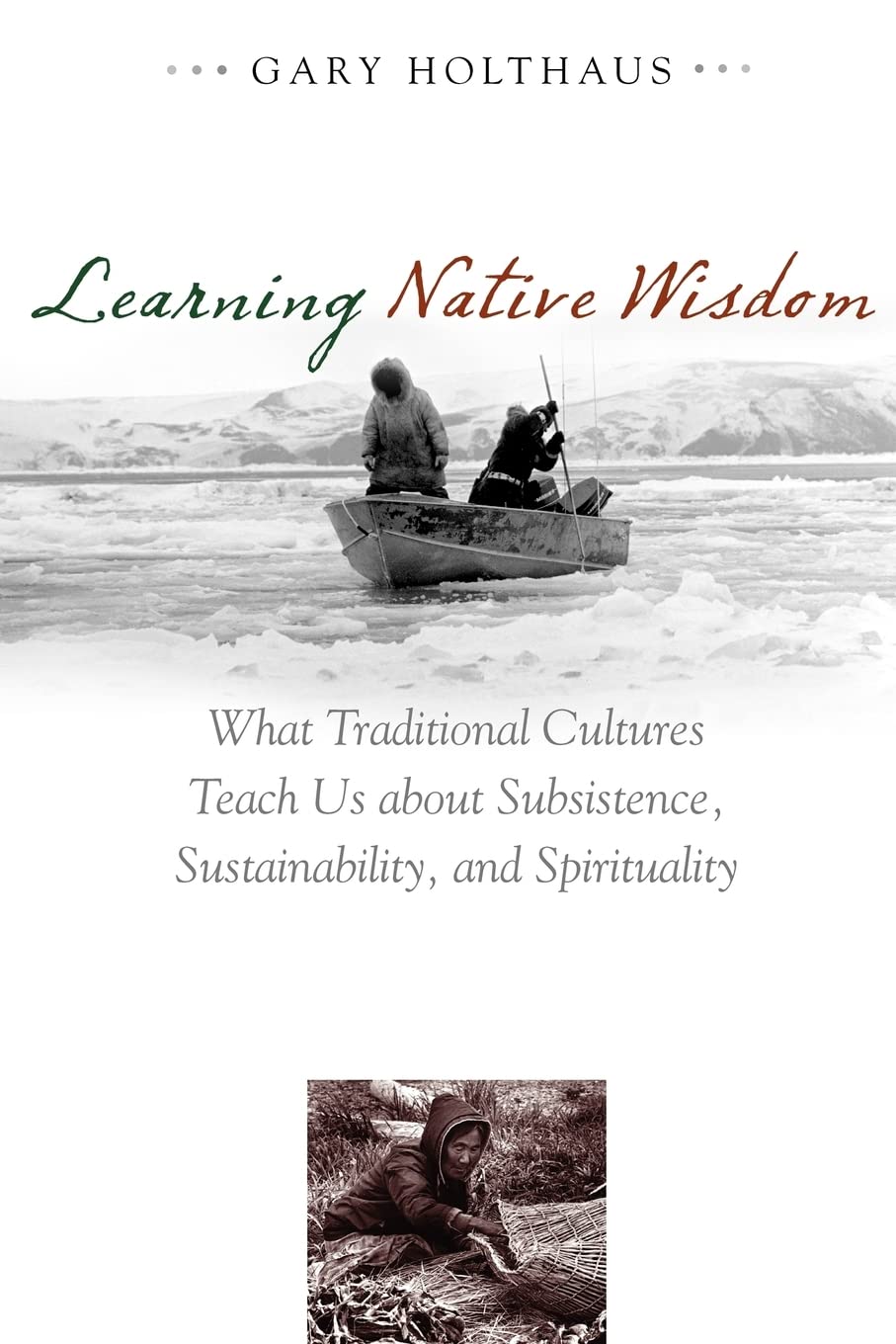
Learning Native Wisdom: What Traditional Cultures Teach Us about Subsistence, Sustainability, and Spirituality (Culture Of The Land)
BHD1857
Quantity:
Order today to get by 7-14 business days
Delivery fee of BHD 2. Free for orders above BHD 20.
 Imported From: United States
At BOLO, we work hard to ensure the products you receive are new, genuine, and sourced from reputable suppliers.
Every product in the BOLO catalogue is sourced through our Verified Global Supply Network of verified sellers, authorized distributors or directly from the manufacturer.
Each product undergoes thorough inspection and verification at our consolidation and fulfilment centers to ensure it meets our strict authenticity and quality standards before being shipped and delivered to you.
If you ever have concerns regarding the authenticity of a product purchased from us, please contact Bolo Support. We will review your inquiry promptly and, if necessary, provide documentation verifying authenticity or offer a suitable resolution.
Your trust is our top priority, and we are committed to maintaining transparency and integrity in every transaction.
While we strive to display accurate information, variations in packaging, labeling, instructions, or formulation may occasionally occur due to regional differences or supplier updates. For detailed or manufacturer-specific information, please contact the brand directly or reach out to BOLO Support for assistance.
Unless otherwise stated, all prices displayed on the product page include applicable taxes and import duties.
BOLO operates in accordance with the laws and regulations of Bahrain. Any items found to be restricted or prohibited for sale within the Bahrain will be cancelled prior to shipment. We take proactive measures to ensure that only products permitted for sale in Bahrain are listed on our website.
All items are shipped by air, and any products classified as “Dangerous Goods (DG)” under IATA regulations will be removed from the order and cancelled.
All orders are processed manually, and we make every effort to process them promptly once confirmed. Products cancelled due to the above reasons will be permanently removed from listings across the website.
More from this brand
Similar items from “Native American Studies”
Share with
Or share with link
https://www.bolo.bh/products/U0813141087
Visit the University Press of Kentucky Store
Learning Native Wisdom: What Traditional Cultures Teach Us about Subsistence, Sustainability, and Spirituality (Culture Of The Land)
BHD1857
Quantity:
Order today to get by 7-14 business days
Delivery fee of BHD 2. Free for orders above BHD 20.
Imported From: United States
At BOLO, we work hard to ensure the products you receive are new, genuine, and sourced from reputable suppliers.
Every product in the BOLO catalogue is sourced through our Verified Global Supply Network of verified sellers, authorized distributors or directly from the manufacturer.
Each product undergoes thorough inspection and verification at our consolidation and fulfilment centers to ensure it meets our strict authenticity and quality standards before being shipped and delivered to you.
If you ever have concerns regarding the authenticity of a product purchased from us, please contact Bolo Support. We will review your inquiry promptly and, if necessary, provide documentation verifying authenticity or offer a suitable resolution.
Your trust is our top priority, and we are committed to maintaining transparency and integrity in every transaction.
While we strive to display accurate information, variations in packaging, labeling, instructions, or formulation may occasionally occur due to regional differences or supplier updates. For detailed or manufacturer-specific information, please contact the brand directly or reach out to BOLO Support for assistance.
Unless otherwise stated, all prices displayed on the product page include applicable taxes and import duties.
BOLO operates in accordance with the laws and regulations of Bahrain. Any items found to be restricted or prohibited for sale within the Bahrain will be cancelled prior to shipment. We take proactive measures to ensure that only products permitted for sale in Bahrain are listed on our website.
All items are shipped by air, and any products classified as “Dangerous Goods (DG)” under IATA regulations will be removed from the order and cancelled.
All orders are processed manually, and we make every effort to process them promptly once confirmed. Products cancelled due to the above reasons will be permanently removed from listings across the website.
Description:
Editorial Reviews
Review
"Perhaps the most profound and right-on-dead-center narrative I have read in a decade. These musings are uncannily brilliant in the way they refresh our sense of the already-hackneyed term sustainability. This book engages readers as if they are in active dialogue with a great mind and are being asked to think as deeply and passionately as the writer."―Gary Paul Nabhab, Gary Paul Nabhab
"Holthaus offers a powerful case that we have ruptured the intimate bond between the health of humankind and the natural world, and that reconnecting the two may be one of our last chances for a viable future."―Garrit Voggesser, Garrit Voggesser
"Learning Native Wisdom teaches that we are all 'native' to the earth. This wisdom is not exotic, primitive, or 'other' but is embedded in the ancient, practical daily lifeways passed down for millennia by all our ancestors―functional, sustainable (ethical), and broadly spiritual. Developed world societies are also subsistence cultures, at the moment locked into hunting and gathering the shirinking resource oil. With wisdom comes gratitude, manners, and care for creation. Holthaus quotes a farmer friend who says. 'No use talking about sustainable agriculture if you don't have a sustainable culture.' This book is just what we need. It is deeply informed by Gary Holthaus's many years of teaching and working in the Alaskan bush."―Gary Snyder, Gary Snyder
"Gary Holthaus shows us with infinite care how our desire for sustainability in many dimensions―agriculture, environment, economy, to name a few―can never be achieved without the support of a sustainable culture. Drawing on age-old wisdom, he argues that subsistence, sustainability, and spirituality must go hand in hand if we are to make our lives and our world healthy and whole. Without romanticizing traditional cultures, he uses their experiences to demonstrate that we humans at one time lived in this world in more sustainable ways and that, knowing this, we have the possibility to do so again."―David D. Chrislip, David D. Chrislip
"Holthaus illuminates the sharp distinctions between the long-term view taken by Native peoples regarding the connection between nature and humans, and the 'immediate return' goals of the U.S. economy, exemplified by our 'frantic hunt for the last barrel of oil.'"―Deborah Donovan, Booklist
"Holthaus's collection of essays is a pleasant immersion in the environmental philosophy of Native American (mainly Alaskan, in this case) ways of life and belief that contrast so vividly with the consumerist culture that permeates today's world."―Choice
"This is story-telling as learned from [Holthaus's] Indian and Eskimo friends and mentors in Alaska, with a brilliance that is refreshing because it is rooted in experience. Anyone interested in sustainability will find this book engaging and different."―Craig Gerlach, Agricultural History
"For Holthaus, the 'spiritual task' is to learn to love the universe, including all the creation and the destruction, the health and the disease. Holthaus does a wonderful job of communicating this task throughout Learning Native Wisdom, as he describes how engagements in the continual effort of creating a sustainable culture require that humans learn to tell each other stories, learn to love the universe, learn to practice self-cultivation, and learn to participate in the relationship and reciprocity that entwine humans and the natural world."―Worldviews: Environment Culture Religion
"[Holthaus] challenges [readers] to be mindful of their words, to shape them according to a larger vision of the sorts of persons they wish to be."―Agricultural Environment Ethics
"With the foundational stories of many spiritual belief systems and the work of certain spiritual leaders, Holthaus assesses how traditional and non-traditional spiritual belief systems might exist in contemporary culture." ―Hilary B. Booker, Department of Environmental Studies, Antioch University
About the Author
Gary Holthaus is the author of several books, including From the Farm to the Table: What All Americans Need to Know about Agriculture and Wide Skies: Finding a Home in the West.
Details:
More from this brand
Similar items from “Native American Studies”
Share with
Or share with link
https://www.bolo.bh/products/U0813141087