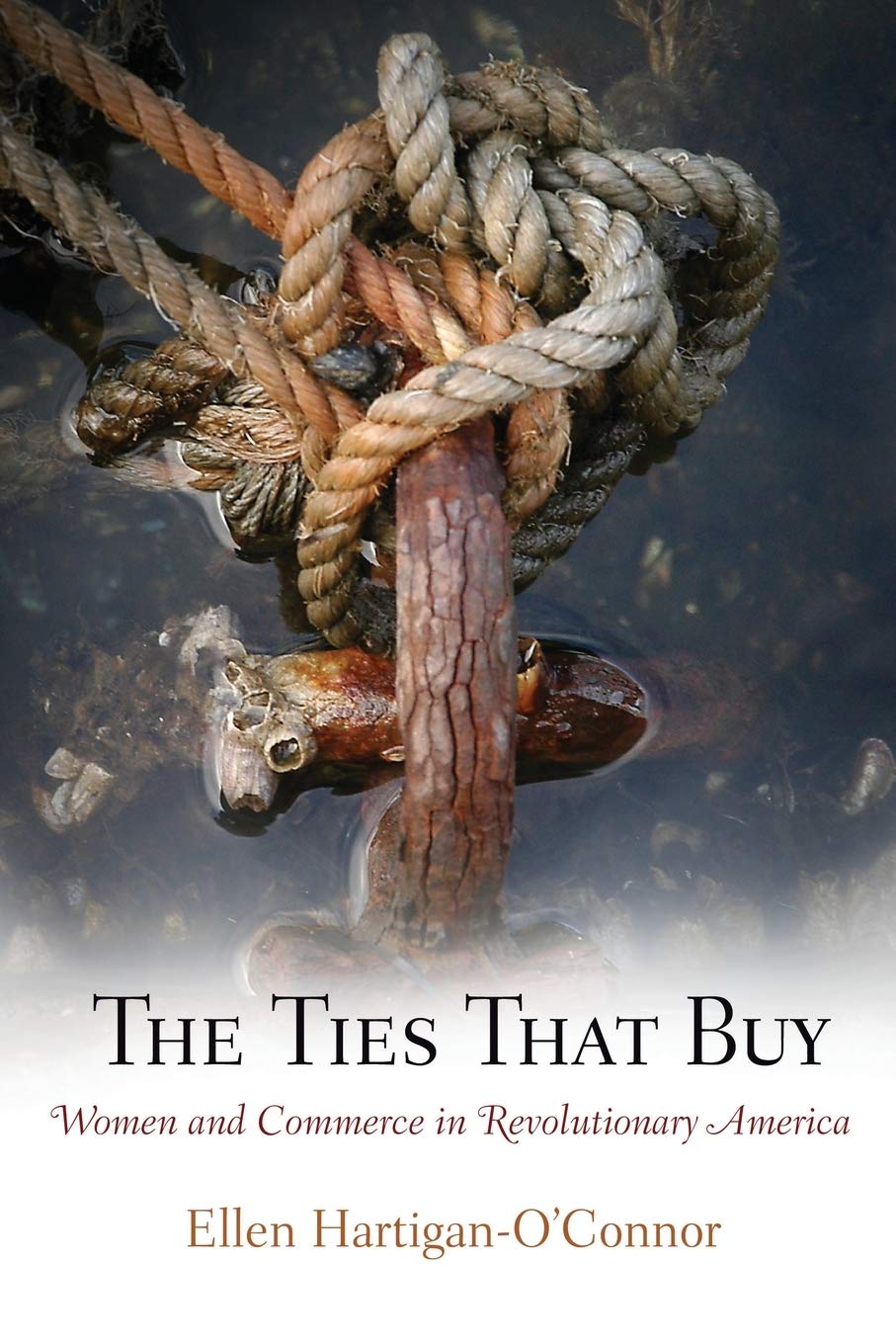
Description:
Editorial Reviews
Review
"In this nuanced and innovative book, Ellen Hartigan-O'Connor moves female economic life from the margins of society to the center-where it belongs. Instead of focusing on the great merchants, she explains how and why women of all ranks were central to economic development. And by taking a new and intriguing approach to consumerism, she shows how the production and importation of goods transformed women's lives. This is a creative and important work." ― Elaine Forman Crane, Fordham University
"The Ties That Buy challenges our assumptions about the eighteenth-century American marketplace and the world of commerce. In the author's eyes, this world was not a male-defined or even male-dominated space. Poor, middling, and elite women as well as free and enslaved African American women were a significant presence as savvy entrepreneurs, producers, and consumers who knew about commodities. They also knew about money-how to get it, how to use it, how to spend it. I know of no other book that covers these themes in such a succinct and interesting way." ― Susan Branson, Syracuse University
"Through an examination of residence, work, credit, circulation of money, and shopping patterns, Hartigan-O'Connor has created a detailed account of the colonial women who helped shape the vocabulary of commerce with their economic networks. This book provides insight into the everyday practices of women and a meticulous look at the economic implications of everyday life in the era explored." ― Women's Studies
About the Author
Details:
Visit the Ellen Hartigan-O'Connor (Author) Store
The Ties That Buy: Women and Commerce in Revolutionary America (Early American Studies)
BHD1745
Quantity:
Order today to get by 7-14 business days
Delivery fee of BHD 2. Free for orders above BHD 20.
 Imported From: United States
At BOLO, we work hard to ensure the products you receive are new, genuine, and sourced from reputable suppliers.
Every product in the BOLO catalogue is sourced through our Verified Global Supply Network of verified sellers, authorized distributors or directly from the manufacturer.
Each product undergoes thorough inspection and verification at our consolidation and fulfilment centers to ensure it meets our strict authenticity and quality standards before being shipped and delivered to you.
If you ever have concerns regarding the authenticity of a product purchased from us, please contact Bolo Support. We will review your inquiry promptly and, if necessary, provide documentation verifying authenticity or offer a suitable resolution.
Your trust is our top priority, and we are committed to maintaining transparency and integrity in every transaction.
While we strive to display accurate information, variations in packaging, labeling, instructions, or formulation may occasionally occur due to regional differences or supplier updates. For detailed or manufacturer-specific information, please contact the brand directly or reach out to BOLO Support for assistance.
Unless otherwise stated, all prices displayed on the product page include applicable taxes and import duties.
BOLO operates in accordance with the laws and regulations of Bahrain. Any items found to be restricted or prohibited for sale within the Bahrain will be cancelled prior to shipment. We take proactive measures to ensure that only products permitted for sale in Bahrain are listed on our website.
All items are shipped by air, and any products classified as “Dangerous Goods (DG)” under IATA regulations will be removed from the order and cancelled.
All orders are processed manually, and we make every effort to process them promptly once confirmed. Products cancelled due to the above reasons will be permanently removed from listings across the website.
More from this brand
Similar items from “Revolution & Founding”
Share with
Or share with link
https://www.bolo.bh/products/U0812221591
Visit the Ellen Hartigan-O'Connor (Author) Store
The Ties That Buy: Women and Commerce in Revolutionary America (Early American Studies)
BHD1745
Quantity:
Order today to get by 7-14 business days
Delivery fee of BHD 2. Free for orders above BHD 20.
Imported From: United States
At BOLO, we work hard to ensure the products you receive are new, genuine, and sourced from reputable suppliers.
Every product in the BOLO catalogue is sourced through our Verified Global Supply Network of verified sellers, authorized distributors or directly from the manufacturer.
Each product undergoes thorough inspection and verification at our consolidation and fulfilment centers to ensure it meets our strict authenticity and quality standards before being shipped and delivered to you.
If you ever have concerns regarding the authenticity of a product purchased from us, please contact Bolo Support. We will review your inquiry promptly and, if necessary, provide documentation verifying authenticity or offer a suitable resolution.
Your trust is our top priority, and we are committed to maintaining transparency and integrity in every transaction.
While we strive to display accurate information, variations in packaging, labeling, instructions, or formulation may occasionally occur due to regional differences or supplier updates. For detailed or manufacturer-specific information, please contact the brand directly or reach out to BOLO Support for assistance.
Unless otherwise stated, all prices displayed on the product page include applicable taxes and import duties.
BOLO operates in accordance with the laws and regulations of Bahrain. Any items found to be restricted or prohibited for sale within the Bahrain will be cancelled prior to shipment. We take proactive measures to ensure that only products permitted for sale in Bahrain are listed on our website.
All items are shipped by air, and any products classified as “Dangerous Goods (DG)” under IATA regulations will be removed from the order and cancelled.
All orders are processed manually, and we make every effort to process them promptly once confirmed. Products cancelled due to the above reasons will be permanently removed from listings across the website.
Description:
Editorial Reviews
Review
"In this nuanced and innovative book, Ellen Hartigan-O'Connor moves female economic life from the margins of society to the center-where it belongs. Instead of focusing on the great merchants, she explains how and why women of all ranks were central to economic development. And by taking a new and intriguing approach to consumerism, she shows how the production and importation of goods transformed women's lives. This is a creative and important work." ― Elaine Forman Crane, Fordham University
"The Ties That Buy challenges our assumptions about the eighteenth-century American marketplace and the world of commerce. In the author's eyes, this world was not a male-defined or even male-dominated space. Poor, middling, and elite women as well as free and enslaved African American women were a significant presence as savvy entrepreneurs, producers, and consumers who knew about commodities. They also knew about money-how to get it, how to use it, how to spend it. I know of no other book that covers these themes in such a succinct and interesting way." ― Susan Branson, Syracuse University
"Through an examination of residence, work, credit, circulation of money, and shopping patterns, Hartigan-O'Connor has created a detailed account of the colonial women who helped shape the vocabulary of commerce with their economic networks. This book provides insight into the everyday practices of women and a meticulous look at the economic implications of everyday life in the era explored." ― Women's Studies
About the Author
Details:
More from this brand
Similar items from “Revolution & Founding”
Share with
Or share with link
https://www.bolo.bh/products/U0812221591