Description:
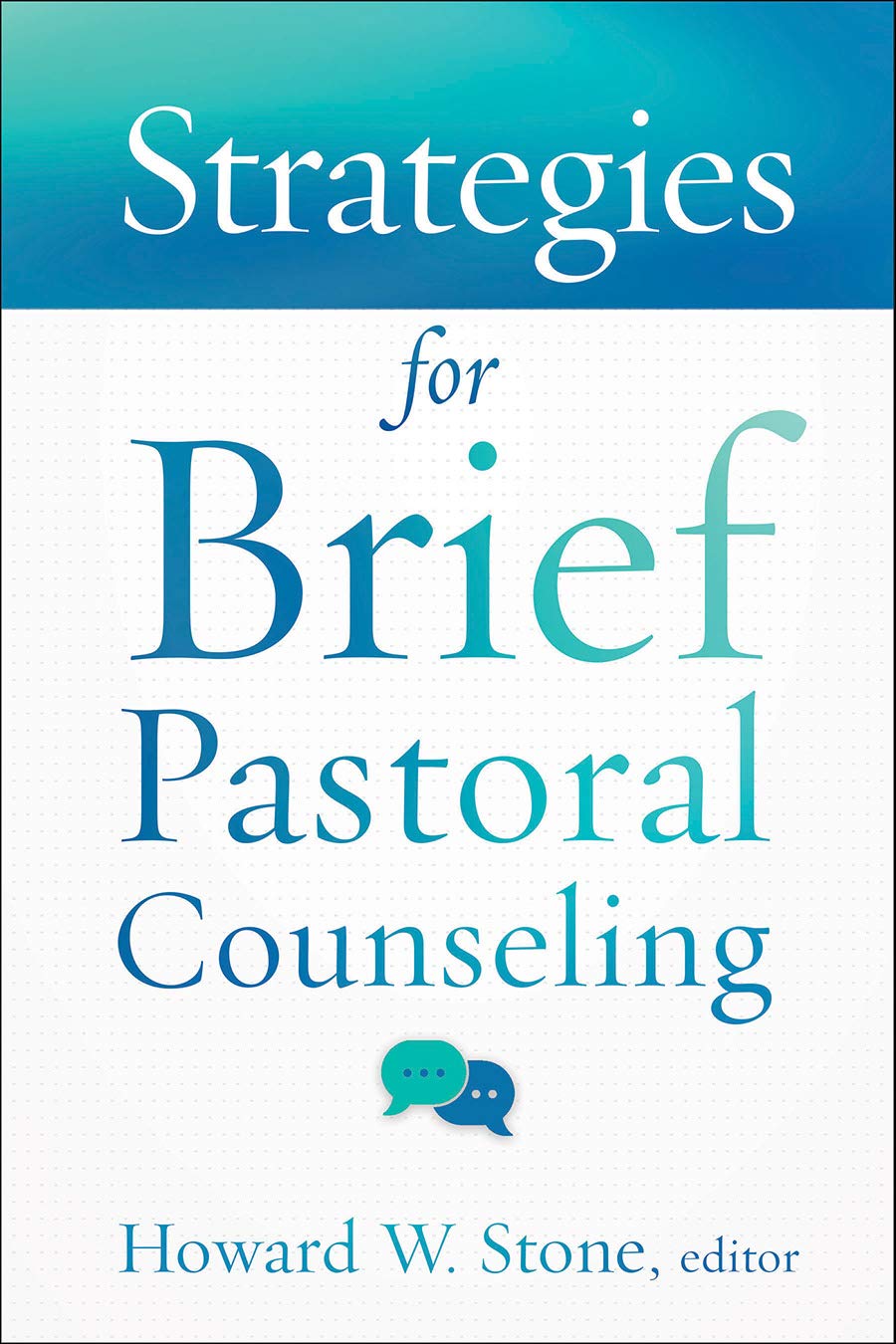
More and more professionals in ministry realized the benefits of brief pastoral counselingtypically three sessionsfor addressing the real-life dilemmas of their congregants. In this very helpful resource, eleven leaders in pastoral counselingboth established leaders and new thinkers in the fieldoffer a convincing rationale.
Based on reserach, case studies, and the latest thinking, they lay out (1) the dynamics of the pastor-parishioner relationship, including the need for collaborative, hospitable, future-oriented, and wholistic counseling, and (2) specific strategies, including brief counseling's solution-focused method, its relation to spiritual direction, its focus on people's strengths, and time limits. The volume concludes with a call for the whole field to recognize the contextual, practical character of effective, responsible pastoral counseling.
From the Publisher
In the congregational context, therefore, counseling inevitably is brief (brief in this volume designates a counseling duration of no more than ten sessions, but typically many fewer). Parish pastors have little choice in the matter; it is their reality. Like the doctors, teachers, and anglers in the illustrations above, if they are to minister effectively, they need to adopt strategies to suit that reality. As early as 1949, Seward Hiltner wrote that the time limitations of the parish suggest that most pastors counseling be brief. According to him, the principal benefit of brief counseling is to help a parishioner turn the corner, or change direction: Even brief counseling can often do just enough to bring a slightly new perspective, hence altering the approach to the situation and giving a chance for spontaneous successful handling of it by the parishioner. Generally Hiltner and his contemporaries favored an insight-oriented, long-term counseling approach. Brief pastoral counseling methods are much more finely tuned now than when he wrote these lines, and they are better designed to help people change direction in a few sessions. Turning the corner, in fact, is a primary goal of brief pastoral counseling, under the assumption that the other ministries of the church will continue to support people as they grow and move into the future. Strategies for Brief Pastoral Counseling is an attempt to synthesize the thinking of established and up-and-coming thinkers in the area of brief pastoral counseling. It follows up the work I began in Brief Pastoral Counseling and, much earlier, in Crisis Counseling. The book summarizes the literature in the brief pastoral counseling field and offers a new way, one that addresses the real, day-to-day context of pastoral counseling as it is practiced in local congregations among living, breathing, unique persons. The eleven authors of Strategies for Brief Pastoral Counseling propose an orientation toward pastoral counseling based upon short-term counseling theory and methodology, with the underlying assumption that the vast majority of counselees wish to deal expeditiously with their problems and are unable or unwilling to devote more than a few visits to the task. People seek help from religious professionals because they quickly want to address whatever is troubling them, and not necessarily to achieve insight or delve into their distant pasts. While the primary context of pastoral counseling is the congregation, the authors do not intend to exclude pastoral care and counseling specialists; indeed, it is my hope that many of them will read these chapters. Some may find themselves working once again in the parish setting as changes in insurance benefits and health care delivery cause a shift away from long-term therapy for troubled people. Indeed, a majority of the work of specialists, whether they are hospital chaplains, private practitioners in pastoral counseling, or military chaplains, is already brief in nature. Experiences and ideas of these professionals are needed in the conversation. It is my hope that the ministries of parish pastors and pastoral counseling specialists will inform and enrich each other.
About the Author
Howard W. Stone is professor emeritus of psychology and pastoral counseling at Brite Divinity School, Texas Christian University. He is the author of many influential books, including Depression and Hope, and editor of Strategies for Brief Pastoral Counseling.
Excerpt. © Reprinted by permission. All rights reserved.
The Changing Times: A Case for Brief Pastoral Counseling
Howard W. Stone
Tony Hillerman, best-selling author of mysteries set in the American southwest, tells the true tale of Black Jack Ketchum, the most successful train robber Folsom, New Mexico, had ever known. Black Jack figured out that, while chugging up the old horseshoe curve southeast of Folsom, the Colorado and Southern train had to slow down so much that a horseman could hop out of the stirrups and onto the train without even having to gallop his horse. It was, apparently, like snatching candy from a baby. The system worked for him over and over again, so brilliantly that he saw no reason to change it.
Eventually the Colorado and Southern Railroad management figured out what he was doing. They packed the train with guards. The next time Black Jack rode up in his usual style, they shot and captured him and quickly brought him to trial after which, Hillerman adds, he was consequently and subsequently hanged over at Clayton with such enthusiasm that his head came off. Ketchum had a method that worked perfectly for a time, but the times changed.
The times are changing for health care and pastoral care just as they changed for Black Jack Ketchum. Long-term therapy was the underpinning of pastoral counseling in the early days of the twentieth century, and remains so for some practitioners in the twenty-first century. It was appropriate then because it was based upon the best information available at the time. Today new information is available. This new data not only favors brief approaches but suggests that, except in a few select cases, long-term counseling is no longer practical. The medical profession has gotten the word. So have mental health researchers, the United States Department of Health and Education, insurance companies, and mental health providers. If the Colorado and Southern Railroad were still operating today, its managed health care organization most likely would mandate some version of brief counseling (in combination with pharmaceuticals, when appropriate) for the treatment of employees mental health problems.
The fact is, congregational ministers, priests, and rabbis traditionally have practiced brief counseling for many generations in the parishes they serve. As a variety of other helping professionals discover brief counseling with its many advantages it is effective, enduring, economical, and humane the time has come for parish pastors to reclaim it as the preferred strategy for helping troubled parishioners who come to them for guidance in resolving their difficulties.
The basic premise of this chapter is that brief pastoral counseling methods should be the primary mode of operation for pastoral caregivers parish pastors and chaplains as well as pastoral counseling specialists.
Focus on Research
When choosing methods to use in your counseling, what do you take into consideration? Your training? Readings in the field, amply illustrated with individual case studies? Past experience? How we go about counseling parishioners certainly grows out of our own experience, but it also needs to rely on the demonstrable experience of others and the outcomes of their counseling. Well-constructed research documents the work of others in a controlled way and helps to mitigate the unavoidable bias of the helper who is doing the counseling. Pastoral counseling needs to pay more attention to such research, especially to outcome studies, than the field traditionally has done.
My personal physician is a fine family practitioner named Joseph Cappel. When I go to see him, I expect him to have read all of the current journals and bulletins that apply to his area of medicine. If I have a physical ailment, I want him to use state-of-the-art procedures that are based on the best and latest research in the field. Let us say he has two choices of therapy for my condition, and both have been shown in research to be equally effective but one is more invasive, takes longer, and is more expensive than the other. I trust (and my HMO demands) that he will consider those findings when he prescribes my treatment.
Surely clergy have a similar obligation to their parishioners. We have been trained to give heed to revelatory personal experience; however, carefully designed qualitative and quantitative research may be equally revelatory. We need to stay abreast of sound research in our field, and to consider it in choosing how we offer care to those who trust us with their well-being.
Most people who come to us for help are not on a quest for self-discovery. They seek to resolve a specific problem and move on as quickly as possible, not to overhaul their personality. Even though many counselors who are in therapy themselves appreciate and value their personal journey of discovery, for the most part their counselees do not. After the first session, most people do not return for many additional sessions, if they return at all. The pastoral counseling process is by default if not by design a short one. People tell us by their actions that, along with alleviation of their troubles, in counseling they want brevity.
There was a time when insurance companies tacitly condoned the long-term therapy bias by at least partially covering its costs. That is no longer the case. Today many health maintenance organizations and insurers reimburse only the more cost-effective brief therapies. The change to short-term modalities has sent ripples throughout the mental health community and set off controversy between proponents of the two approaches.
Is brief counseling a sign of the times? In our fast food, instant coffee, crash diet, microwave age, have people lost their patience to work toward long-term solutions to their problems? Is the desire for a quick fix part of their pathology? Or is it a sign of health, of a willingness to tackle a problem head-on and promptly do what is needed to get on with the business of living?
Details:
Visit the Fortress Press Store
Strategies for Brief Pastoral Counseling (Creative Pastoral Care and Counseling)
BHD1761
Quantity:
Order today to get by 7-14 business days
Delivery fee of BHD 2. Free for orders above BHD 20.
 Imported From: United States
At BOLO, we work hard to ensure the products you receive are new, genuine, and sourced from reputable suppliers.
Every product in the BOLO catalogue is sourced through our Verified Global Supply Network of verified sellers, authorized distributors or directly from the manufacturer.
Each product undergoes thorough inspection and verification at our consolidation and fulfilment centers to ensure it meets our strict authenticity and quality standards before being shipped and delivered to you.
If you ever have concerns regarding the authenticity of a product purchased from us, please contact Bolo Support. We will review your inquiry promptly and, if necessary, provide documentation verifying authenticity or offer a suitable resolution.
Your trust is our top priority, and we are committed to maintaining transparency and integrity in every transaction.
While we strive to display accurate information, variations in packaging, labeling, instructions, or formulation may occasionally occur due to regional differences or supplier updates. For detailed or manufacturer-specific information, please contact the brand directly or reach out to BOLO Support for assistance.
Unless otherwise stated, all prices displayed on the product page include applicable taxes and import duties.
BOLO operates in accordance with the laws and regulations of Bahrain. Any items found to be restricted or prohibited for sale within the Bahrain will be cancelled prior to shipment. We take proactive measures to ensure that only products permitted for sale in Bahrain are listed on our website.
All items are shipped by air, and any products classified as “Dangerous Goods (DG)” under IATA regulations will be removed from the order and cancelled.
All orders are processed manually, and we make every effort to process them promptly once confirmed. Products cancelled due to the above reasons will be permanently removed from listings across the website.
More from this brand
Similar items from “Pastoral Resources”
Share with
Or share with link
https://www.bolo.bh/products/U0800632990
Visit the Fortress Press Store
Strategies for Brief Pastoral Counseling (Creative Pastoral Care and Counseling)
BHD1761
Quantity:
Order today to get by 7-14 business days
Delivery fee of BHD 2. Free for orders above BHD 20.
Imported From: United States
At BOLO, we work hard to ensure the products you receive are new, genuine, and sourced from reputable suppliers.
Every product in the BOLO catalogue is sourced through our Verified Global Supply Network of verified sellers, authorized distributors or directly from the manufacturer.
Each product undergoes thorough inspection and verification at our consolidation and fulfilment centers to ensure it meets our strict authenticity and quality standards before being shipped and delivered to you.
If you ever have concerns regarding the authenticity of a product purchased from us, please contact Bolo Support. We will review your inquiry promptly and, if necessary, provide documentation verifying authenticity or offer a suitable resolution.
Your trust is our top priority, and we are committed to maintaining transparency and integrity in every transaction.
While we strive to display accurate information, variations in packaging, labeling, instructions, or formulation may occasionally occur due to regional differences or supplier updates. For detailed or manufacturer-specific information, please contact the brand directly or reach out to BOLO Support for assistance.
Unless otherwise stated, all prices displayed on the product page include applicable taxes and import duties.
BOLO operates in accordance with the laws and regulations of Bahrain. Any items found to be restricted or prohibited for sale within the Bahrain will be cancelled prior to shipment. We take proactive measures to ensure that only products permitted for sale in Bahrain are listed on our website.
All items are shipped by air, and any products classified as “Dangerous Goods (DG)” under IATA regulations will be removed from the order and cancelled.
All orders are processed manually, and we make every effort to process them promptly once confirmed. Products cancelled due to the above reasons will be permanently removed from listings across the website.
Description:
More and more professionals in ministry realized the benefits of brief pastoral counselingtypically three sessionsfor addressing the real-life dilemmas of their congregants. In this very helpful resource, eleven leaders in pastoral counselingboth established leaders and new thinkers in the fieldoffer a convincing rationale.
Based on reserach, case studies, and the latest thinking, they lay out (1) the dynamics of the pastor-parishioner relationship, including the need for collaborative, hospitable, future-oriented, and wholistic counseling, and (2) specific strategies, including brief counseling's solution-focused method, its relation to spiritual direction, its focus on people's strengths, and time limits. The volume concludes with a call for the whole field to recognize the contextual, practical character of effective, responsible pastoral counseling.
From the Publisher
In the congregational context, therefore, counseling inevitably is brief (brief in this volume designates a counseling duration of no more than ten sessions, but typically many fewer). Parish pastors have little choice in the matter; it is their reality. Like the doctors, teachers, and anglers in the illustrations above, if they are to minister effectively, they need to adopt strategies to suit that reality. As early as 1949, Seward Hiltner wrote that the time limitations of the parish suggest that most pastors counseling be brief. According to him, the principal benefit of brief counseling is to help a parishioner turn the corner, or change direction: Even brief counseling can often do just enough to bring a slightly new perspective, hence altering the approach to the situation and giving a chance for spontaneous successful handling of it by the parishioner. Generally Hiltner and his contemporaries favored an insight-oriented, long-term counseling approach. Brief pastoral counseling methods are much more finely tuned now than when he wrote these lines, and they are better designed to help people change direction in a few sessions. Turning the corner, in fact, is a primary goal of brief pastoral counseling, under the assumption that the other ministries of the church will continue to support people as they grow and move into the future. Strategies for Brief Pastoral Counseling is an attempt to synthesize the thinking of established and up-and-coming thinkers in the area of brief pastoral counseling. It follows up the work I began in Brief Pastoral Counseling and, much earlier, in Crisis Counseling. The book summarizes the literature in the brief pastoral counseling field and offers a new way, one that addresses the real, day-to-day context of pastoral counseling as it is practiced in local congregations among living, breathing, unique persons. The eleven authors of Strategies for Brief Pastoral Counseling propose an orientation toward pastoral counseling based upon short-term counseling theory and methodology, with the underlying assumption that the vast majority of counselees wish to deal expeditiously with their problems and are unable or unwilling to devote more than a few visits to the task. People seek help from religious professionals because they quickly want to address whatever is troubling them, and not necessarily to achieve insight or delve into their distant pasts. While the primary context of pastoral counseling is the congregation, the authors do not intend to exclude pastoral care and counseling specialists; indeed, it is my hope that many of them will read these chapters. Some may find themselves working once again in the parish setting as changes in insurance benefits and health care delivery cause a shift away from long-term therapy for troubled people. Indeed, a majority of the work of specialists, whether they are hospital chaplains, private practitioners in pastoral counseling, or military chaplains, is already brief in nature. Experiences and ideas of these professionals are needed in the conversation. It is my hope that the ministries of parish pastors and pastoral counseling specialists will inform and enrich each other.
About the Author
Howard W. Stone is professor emeritus of psychology and pastoral counseling at Brite Divinity School, Texas Christian University. He is the author of many influential books, including Depression and Hope, and editor of Strategies for Brief Pastoral Counseling.
Excerpt. © Reprinted by permission. All rights reserved.
The Changing Times: A Case for Brief Pastoral Counseling
Howard W. Stone
Tony Hillerman, best-selling author of mysteries set in the American southwest, tells the true tale of Black Jack Ketchum, the most successful train robber Folsom, New Mexico, had ever known. Black Jack figured out that, while chugging up the old horseshoe curve southeast of Folsom, the Colorado and Southern train had to slow down so much that a horseman could hop out of the stirrups and onto the train without even having to gallop his horse. It was, apparently, like snatching candy from a baby. The system worked for him over and over again, so brilliantly that he saw no reason to change it.
Eventually the Colorado and Southern Railroad management figured out what he was doing. They packed the train with guards. The next time Black Jack rode up in his usual style, they shot and captured him and quickly brought him to trial after which, Hillerman adds, he was consequently and subsequently hanged over at Clayton with such enthusiasm that his head came off. Ketchum had a method that worked perfectly for a time, but the times changed.
The times are changing for health care and pastoral care just as they changed for Black Jack Ketchum. Long-term therapy was the underpinning of pastoral counseling in the early days of the twentieth century, and remains so for some practitioners in the twenty-first century. It was appropriate then because it was based upon the best information available at the time. Today new information is available. This new data not only favors brief approaches but suggests that, except in a few select cases, long-term counseling is no longer practical. The medical profession has gotten the word. So have mental health researchers, the United States Department of Health and Education, insurance companies, and mental health providers. If the Colorado and Southern Railroad were still operating today, its managed health care organization most likely would mandate some version of brief counseling (in combination with pharmaceuticals, when appropriate) for the treatment of employees mental health problems.
The fact is, congregational ministers, priests, and rabbis traditionally have practiced brief counseling for many generations in the parishes they serve. As a variety of other helping professionals discover brief counseling with its many advantages it is effective, enduring, economical, and humane the time has come for parish pastors to reclaim it as the preferred strategy for helping troubled parishioners who come to them for guidance in resolving their difficulties.
The basic premise of this chapter is that brief pastoral counseling methods should be the primary mode of operation for pastoral caregivers parish pastors and chaplains as well as pastoral counseling specialists.
Focus on Research
When choosing methods to use in your counseling, what do you take into consideration? Your training? Readings in the field, amply illustrated with individual case studies? Past experience? How we go about counseling parishioners certainly grows out of our own experience, but it also needs to rely on the demonstrable experience of others and the outcomes of their counseling. Well-constructed research documents the work of others in a controlled way and helps to mitigate the unavoidable bias of the helper who is doing the counseling. Pastoral counseling needs to pay more attention to such research, especially to outcome studies, than the field traditionally has done.
My personal physician is a fine family practitioner named Joseph Cappel. When I go to see him, I expect him to have read all of the current journals and bulletins that apply to his area of medicine. If I have a physical ailment, I want him to use state-of-the-art procedures that are based on the best and latest research in the field. Let us say he has two choices of therapy for my condition, and both have been shown in research to be equally effective but one is more invasive, takes longer, and is more expensive than the other. I trust (and my HMO demands) that he will consider those findings when he prescribes my treatment.
Surely clergy have a similar obligation to their parishioners. We have been trained to give heed to revelatory personal experience; however, carefully designed qualitative and quantitative research may be equally revelatory. We need to stay abreast of sound research in our field, and to consider it in choosing how we offer care to those who trust us with their well-being.
Most people who come to us for help are not on a quest for self-discovery. They seek to resolve a specific problem and move on as quickly as possible, not to overhaul their personality. Even though many counselors who are in therapy themselves appreciate and value their personal journey of discovery, for the most part their counselees do not. After the first session, most people do not return for many additional sessions, if they return at all. The pastoral counseling process is by default if not by design a short one. People tell us by their actions that, along with alleviation of their troubles, in counseling they want brevity.
There was a time when insurance companies tacitly condoned the long-term therapy bias by at least partially covering its costs. That is no longer the case. Today many health maintenance organizations and insurers reimburse only the more cost-effective brief therapies. The change to short-term modalities has sent ripples throughout the mental health community and set off controversy between proponents of the two approaches.
Is brief counseling a sign of the times? In our fast food, instant coffee, crash diet, microwave age, have people lost their patience to work toward long-term solutions to their problems? Is the desire for a quick fix part of their pathology? Or is it a sign of health, of a willingness to tackle a problem head-on and promptly do what is needed to get on with the business of living?
Details:
More from this brand
Similar items from “Pastoral Resources”
Share with
Or share with link
https://www.bolo.bh/products/U0800632990