Description:
Editorial Reviews
Review
"Crook has done much... [his] fine book gives me hope that historians will come back to (or, more properly, discover for the first time) a kind of research immensely important to the understanding of the present and the recent past, and long neglected."
― Reviews in History"This book should inspire a good debate in the urban history and the public health subfield over Crook’s argument for a revolutionary discourse of systems." ― American Historical Review
"Crook presents a sophisticated new interpretation of the English route to modernity... this is a very stimulating book that takes a series of traditional urban history debates and casts them in a very different light, both renaming and re-thinking many of the old problems." ― Social History of Medicine
"Tom Crook has produced something of a tour de force, finding an original take on a subject already much traversed by accomplished scholars such as Anne Hardy and Christopher Hamlin. The result is a pleasure to read: the writing lyrical and lucid, and the text moving easily between theoretical frames and rich empirical exposition." ― Cultural and Social History
"A fascinating proposal of how to study technological systems in the nineteenth century."
― Technology and Culture
From the Inside Flap
"Governing Systems is an absolutely excellent book: sophisticated in conception, tightly argued, brilliantly researched, highly polished, and beautifully written. It is restlessly unreductive in its analysis of government, technology, and health, and it makes much of the work in this area seem simplistic by comparison. It achieves this level of subtlety by being simultaneously empirical, theoretical, and synthetic—a rare combination. It truly captures the sense of government as something multiple, dynamic, frustrating, and contingent, by focusing on the mundane, daily, nitty-gritty acts of trying to get people (and technologies) to behave in particular ways to achieve certain ends."—Chris Otter, author of The Victorian Eye: A Political History of Light and Vision in Britain, 1800–1910
From the Back Cover
"Governing Systems is an absolutely excellent book: sophisticated in conception, tightly argued, brilliantly researched, highly polished, and beautifully written. It is restlessly unreductive in its analysis of government, technology, and health, and it makes much of the work in this area seem simplistic by comparison. It achieves this level of subtlety by being simultaneously empirical, theoretical, and synthetic—a rare combination. It truly captures the sense of government as something multiple, dynamic, frustrating, and contingent, by focusing on the mundane, daily, nitty-gritty acts of trying to get people (and technologies) to behave in particular ways to achieve certain ends."—Chris Otter, author of The Victorian Eye: A Political History of Light and Vision in Britain, 1800–1910
About the Author
Excerpt. © Reprinted by permission. All rights reserved.
Governing Systems
Modernity and the Making of Public Health in England, 1830–1910
By Tom CrookUNIVERSITY OF CALIFORNIA PRESS
Copyright © 2016 The Regents of the University of CaliforniaAll rights reserved.
ISBN: 978-0-520-29035-8
Contents
List of Illustrations,Acknowledgments,
List of Abbreviations,
1. In Search of Hygeia: Systems, Modernity, and Public Health,
2. A Perfect Chaos: Centralization and the Struggle for National System,
3. Numbers, Norms, and Opinions: Death and the Measurement of Progress,
4. Officialism: The Art and Practice of Sanitary Inspection,
5. Matter in Its Right Place: Technology and the Building of Waste Disposal Systems,
6. Stamping Out: Logistics, Risk, and Infectious Diseases,
7. Personal Hygiene: Cleanliness, Class, and the Habitual Self,
8. Conclusion: Systems, Variations, Politics,
Notes,
Selected Bibliography,
Index,
CHAPTER 1
In Search of Hygeia
Systems, Modernity, and Public Health
In October 1875, it fell to the physician and sanitary reformer Benjamin Ward Richardson to deliver the presidential address of the health section of the National Association for the Promotion of Social Science (NAPSS). The occasion was the NAPSS's annual congress, which was taking place that year in Brighton, on England's south coast. Since its establishment in 1857, the NAPSS had brought together thousands of ministers, MPs, councillors, local and central officials, professionals, and voluntary activists in order to advance the cause of more rational ways of governing, both at home and in the British Empire. Other sections dealt with education, legal reform, and finance and trade. Richardson later wrote that he had considered giving a lecture entitled "The Statistics of Death Rates." Instead, having been advised that delegates were "worn out with statistics," he decided "to plunge into the imagination" and outline a utopian city of health."
Richardson called this city Hygeia. All houses were furnished with bathrooms and toilets, and were connected to sewerage and water-supply systems. Sewage was channeled to outlying fields, where it was put to use in agriculture. Pedestrians walked tree-lined streets; traffic was directed underground via subways. Sanitary and medical officers worked unhindered. The municipal council was free of political strife. Hospitals were plentiful. All foodstuffs were inspected. And no one smoked or drank alcohol. It was not, he stressed, entirely free of infectious diseases. Scarlet fever, measles, and whooping cough, for instance, would probably persist, even if smallpox, dysentery, cholera, typhoid, and typhus would likely be banished; otherwise, most would die from diseases that arose from "uncontrollable causes," among them cancer and those of a "strong hereditary character." Nonetheless, Hygeia was within reach: Richardson estimated it was only a generation away. The "details" existed in places — the particular technologies, practices, and forms of expertise — and had been "worked out by those pioneers of sanitary science, so many of whom surround me today." It was a question of pulling these elements together to form a coherent and seamless urban system. Like all earthly utopias, it is a vision of wholeness and goodness, and of people and things at their most exemplary, somehow emerging from history at the hands of humans. "Utopia itself is but another word for time," Richardson concluded, having noted that Hygeia contained "nothing whatever but what is at this present moment easily possible."
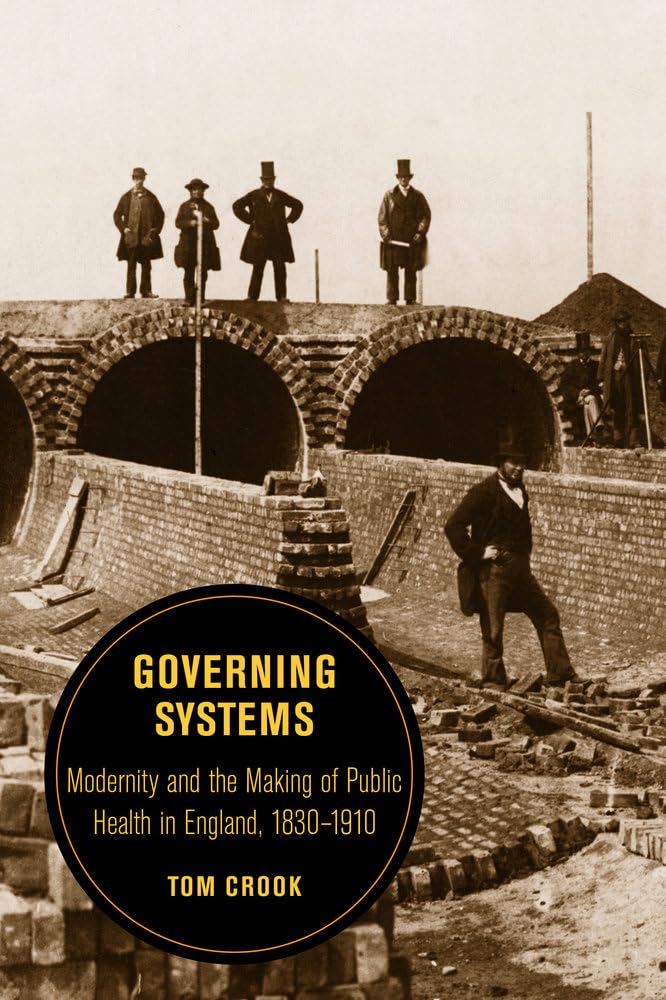
Richardson's presentation of Hygeia is but a scene within the bigger story that this book seeks to retell: the making of a modern public health system in England, roughly 1830 to 1910. The aim is to rethink the modernity of this system by looking at how it was assembled, reformed and, above all, practiced. We begin with Hygeia because it captures something of the epidemiological priorities of public health in this particular pocket of space and time. In Victorian and Edwardian England, the principal focus of public health efforts was the eradication of infectious diseases of a bacterial and viral sort — diseases that would, mercifully, as part of what demographic historians call an "epidemiological transition," lose their deadly salience in the twentieth century, when more chronic and degenerative conditions became the principal causes of death. It captures, too, the growing administrative capacities of public health. Already more than twenty-five years had passed since the establishment (in 1848) of the General Board of Health (GBH), England's first centralized, specialized public health office. By 1875, it was a bureaucratic function that had passed to the Local Government Board (LGB). Since 1872, local authorities had been obliged to appoint medical officers of health (MOsH) and sanitary inspectors. Large-scale sewerage systems were in the process of being constructed. In fact, the largest of these had been completed just that year: London's Main Drainage Scheme, which carried away the waste of more than three million people. Only months before Richardson spoke, parliament had passed the 1875 Public Health Act, a mammoth piece of legislation that consolidated existing statutes passed during the preceding three decades. Its sprawling scope included regulations relating to the supply of water and the disposal of sewage; the sale of food and the slaughter of animals; the disinfection of insanitary homes and business premises; and the provision of hospitals for those suffering from infectious diseases.
It is easy, then, to understand Richardson's confidence: progress was being made, and might not more be had — significantly more? And yet, quite simply, Hygeia was never realized. In some respects, Richardson's imaginary city is the last place we should begin if we wish to understand, as this book does, the practices and practicalities of governing public health in Victorian and Edwardian England. For a real flavor of what happened we might turn to the papers that followed Richardson's address as part of the deliberations of the health section. For sure, there was no sense of fatalism or powerlessness, but there was frustration and dispute in abundance. Acts had been passed, yet some local authorities, whether out of lethargy or active opposition, had still to implement them; and where they had, the results were disappointing. Any kind of uniformity of practice was wholly absent. At the same time, there was no consensus regarding some basic questions of administration: should water-supply systems, for instance, be publicly or privately owned? Some thought the former, others the latter, invoking as they did so conflicting examples of good practice. Meanwhile, delegates delved into a maddening world of technical intricacies, from those that featured as part of the reform of England's portside quarantine system — an urgent matter, given Britain's global-economic dominance at this point — to those that might strike us as somewhat inconsequential. One paper, for instance, was entitled "Roof Pipes for Ventilating Sewers."
Where, we might ask, is Hygeia in all of this? An editorial in the Times was suitably skeptical. It welcomed the ambitions and ideals that informed what it called "Hygeiopolis"; but it was quick to point out that the people of England were just not ready for such a city, given its costs and regulatory burdens. A "model city can never exist," it declared, "until the community intended to inhabit it is educated to render individual freedom subordinate to the public good in a far greater degree than is at present seen to be either useful or necessary by the majority of the people of this country." It went on: "If Hygeiopolis were established tomorrow, before six weeks had passed the Municipal Council would witness a powerful opposition in favour of dirt, freedom and disease." The Times was right: governing public health was — and would remain — enmeshed in political struggles and the variable willingness of the public to accept measures designed to improve its health and longevity. To this we might add that reforms were mooted and by turns rejected, adopted, and reworked; that solutions generated new problems; and that administrative anomalies and shortcomings were routinely acknowledged and debated (as in the deliberations of the NAPSS's health section in 1875). So much for Hygeia: not only was England's public health system a work in progress, always in need of reform; its development was unpredictable, confused, and contested.
Yet, as this book argues, this gap between (high, lofty) ideals and (low, practical) realities goes to the heart of the modernity of the public health system that was assembled in England during the period 1830 to 1910. The book develops this argument by exploiting the word system. Curiously, given its ubiquity, both past and present, the word has yet to take center stage within histories of public health — or indeed histories of other areas of administration that were (and remain) just as systemic, be they educational, economic, legal, or penal, to name but a few.
Today, as in the past, the term carries two principal meanings. One of these, to quote Johnson's Dictionary of the English Language (1755), is "any complexure or combination of many things acting together"; or in the words of a later dictionary, system as an "assemblage of parts adjusted into and working as a whole, being mutually dependent." This, it is argued here, is precisely what the public health system was, in actu: a shifting assemblage of interacting parts and practices, people and things, which, crucially, included more specialized systems — or subsystems, as they might be styled — of sanitary inspection, waste disposal, and statistical classification, among many others. The modernity of the system partly resides in its complexity, and in the way it was reflected upon and realized as a series of systems, from the system as a national whole to multiple systems within.
The other meaning is system as method, as a set of practices that are ordered, regular, and uniform; or, as Johnson's Dictionary had it, "a scheme which unites many things in order." It is from this meaning that the term systematic derives, understood as "methodical, regular," to quote one dictionary published in 1874; or as "methodical, according to a plan, not casual, sporadic, or unintentional," as another later put it in 1914. Let us be clear: England's public health system during the Victorian and Edwardian periods was never systematic — far from it, at all levels, and at each step of the way. And yet, so this book contends, no system, small or large, could have arisen, functioned, or been critiqued without a modicum of desire for, or conception of, systematic systems. To be sure, these conceptions were hugely varied, and at their most extreme they offered visions of total system and administrative perfection; or at least something approaching perfection, as the possibilities were then understood, as in Richardson's Hygeia. Nonetheless, in order to understand what happened and how, the slippage between these two meanings of system should be embraced. It is only by doing so that we can grasp the modern dynamism — the spirit of restless critique and permanent innovation — in which a public health system was put together and practiced in Victorian and Edwardian England. No one was antisystem, even if some were more pragmatic than others. And if there was frustration, then it was frustration born of the assumption of historical progress, and that things might be administered in a more systematic, efficient, and uniform fashion. Modernity is nothing if not a confused, Sisyphean search for cities like Hygeia.
In sum, this is a book about why Hygeia was never built. But it is also a book about modernity, and a culture of governing in which a city such as Hygeia was taken seriously and deemed possible.
FROM THE "HEROIC" TO THE "ANTIHEROIC"
To focus on systems is not the usual way to write the history of modern public health in England. Equally, to seek to refresh and reinvigorate a sense of the modernity of public health in Victorian and Edwardian England is to swim against the tide of the revisionist scholarship that has developed since the 1970s. This is not the place to offer a detailed review of what is now a voluminous literature, characterized by multiple concerns, geographies, arguments, and methodologies; and excellent reviews exist already. Even so, when it comes to thinking about the modernity of Victorian public health — and it is here where the rub lies, in the Victorian period — we might speak of the dissolution of some crucial analytical coordinates; or, to borrow from Dorothy Porter, introducing her comparative collection, The History of Public Health and the Modern State, a broad shift from a "heroic" to an "antiheroic" historiography.
The former took shape in the 1950s and 1960s. Whether in a biographical vein or not, accounts of this sort stressed the industry of leading reformers — notably Edwin Chadwick, William Farr, and John Simon — and their allies as they struggled to impose an enlightened, centralized, and science-based program of public administration. Apathetic ministers and parsimonious ratepayers were among the villains, attached as they were to non-interventionism and outmoded traditions of local self-government. Meanwhile, comparative accounts, notably George Rosen's classic study, A History of Public Health, situated England firmly in the European van of nations that pioneered modern public health. The "seed-beds" of the "revolution" to come were many, Rosen suggested, not least German conceptions of an all-encompassing "medical police," which emerged in the second half of the eighteenth century. Revolutionary France and industrial England, however, were home to the first public health "movements," he argued, even if the lead quickly passed to the latter during the mid-nineteenth century. It was at this point when towns and cities began building what would become England's most celebrated contribution to the cause of public health: waterborne sewerage systems.
Invariably, this scholarship was of its time. As Richard Price has argued, the 1950s to 1970s were decades when historians took as their starting point the Victorians' own sense of epochal change, while looking backward through the modernizing "lens of the twentieth century." In this case the "lens" offered a vision of a collectivist, social-democratic modernity; or in the case of public health, a future of socialized medicine. In Britain at least, books on public health were thus part of a broader seam of works written on the "origins" of the welfare state, the NHS, and council housing amid the more liberal, laissez-faire modernity of the nineteenth century. It was at this point, in the throes of a society enduring the twin traumas of urbanization and industrialization, when a modern state began to cohere. There was even talk of a Victorian "revolution in government," presaging the more obvious milestones reached by the New Liberalism of the Edwardian period, chief among them the National Insurance Act of 1911.
It would be wrong to caricature this literature. No consensus emerged from these accounts. There was intense debate, for instance, regarding the precise admixture of governing philosophies that presided over the "growth of the state," if indeed they played any role at all. Even so, the welfare state of postwar Britain served as a crucial means of narrative orientation. At the very least it lent the story of Victorian and Edwardian public health a progressive quality, rooted in science and humanitarian sentiments, while amplifying a sense of the modernity and novelty of what happened.
The antiheroic scholarship that began to develop in the 1980s has not dispatched entirely with the conceptual apparatus and terminology of the more heroic historiography, or with some of its claims. "Modern society" and "modern public health" are still invoked. So too is a "modern state" that was at once more centralized, bureaucratic, and information-rich compared to its medieval, early modern, and eighteenth-century predecessors. Comparative accounts still rank England among the homes of modern public health, and still largely for its development of more environmental and sanitary approaches. Every other facet of the scholarship, however, has been significantly modified, even overturned, dissolving any sense of progressive or necessary problem solving, while encouraging a more diminished sense of novelty and change. Crudely, we might distinguish between four lines of revisionist reappraisal.
The first is the most diffuse: the absence of any overarching modernizing trajectory and, accordingly, the constitutive importance of national and local peculiarities. Peter Baldwin's Contagion and the State in Europe, 1830–1930 is the most striking account in this respect. Baldwin's aim is to contest the correlation, first mooted by Erwin Ackerknecht in 1948, between "politics and prevention," and especially between the styles of regulation pursued in more liberal regimes, such as Britain and France, and those of a more conservative and authoritarian sort, such as Prussia, Austria, and Russia. Instead, examining Britain, France, Germany, and Sweden, Baldwin points to the following in each national case: (a) peculiar and "polymorphous" combinations of prophylactic responses to common pathogenic enemies — in particular cholera, smallpox, and syphilis — ranging from environmental interventions to more person-centered techniques of quarantine, vaccination, and isolation; and (b) a "multiplicity" of explanatory factors, among them political traditions; moral scruples and religious sensibilities; geopolitical interests; and considerations of administrative geography and capability.
(Continues...)Excerpted from Governing Systems by Tom Crook. Copyright © 2016 The Regents of the University of California. Excerpted by permission of UNIVERSITY OF CALIFORNIA PRESS.
All rights reserved. No part of this excerpt may be reproduced or reprinted without permission in writing from the publisher.
Excerpts are provided by Dial-A-Book Inc. solely for the personal use of visitors to this web site.
Details:
Visit the University of California Press Store
Governing Systems: Modernity and the Making of Public Health in England, 1830–1910 (Volume 11) (Berkeley Series in British Studies)
BHD2390
Quantity:
Order today to get by 7-14 business days
This item qualifies for free delivery
 Imported From: United States
At BOLO, we work hard to ensure the products you receive are new, genuine, and sourced from reputable suppliers.
Every product in the BOLO catalogue is sourced through our Verified Global Supply Network of verified sellers, authorized distributors or directly from the manufacturer.
Each product undergoes thorough inspection and verification at our consolidation and fulfilment centers to ensure it meets our strict authenticity and quality standards before being shipped and delivered to you.
If you ever have concerns regarding the authenticity of a product purchased from us, please contact Bolo Support. We will review your inquiry promptly and, if necessary, provide documentation verifying authenticity or offer a suitable resolution.
Your trust is our top priority, and we are committed to maintaining transparency and integrity in every transaction.
While we strive to display accurate information, variations in packaging, labeling, instructions, or formulation may occasionally occur due to regional differences or supplier updates. For detailed or manufacturer-specific information, please contact the brand directly or reach out to BOLO Support for assistance.
Unless otherwise stated, all prices displayed on the product page include applicable taxes and import duties.
BOLO operates in accordance with the laws and regulations of Bahrain. Any items found to be restricted or prohibited for sale within the Bahrain will be cancelled prior to shipment. We take proactive measures to ensure that only products permitted for sale in Bahrain are listed on our website.
All items are shipped by air, and any products classified as “Dangerous Goods (DG)” under IATA regulations will be removed from the order and cancelled.
All orders are processed manually, and we make every effort to process them promptly once confirmed. Products cancelled due to the above reasons will be permanently removed from listings across the website.
More from this brand
Similar items from “England”
Share with
Or share with link
https://www.bolo.bh/products/U0520290356
Visit the University of California Press Store
Governing Systems: Modernity and the Making of Public Health in England, 1830–1910 (Volume 11) (Berkeley Series in British Studies)
BHD2390
Quantity:
Order today to get by 7-14 business days
This item qualifies for free delivery
Imported From: United States
At BOLO, we work hard to ensure the products you receive are new, genuine, and sourced from reputable suppliers.
Every product in the BOLO catalogue is sourced through our Verified Global Supply Network of verified sellers, authorized distributors or directly from the manufacturer.
Each product undergoes thorough inspection and verification at our consolidation and fulfilment centers to ensure it meets our strict authenticity and quality standards before being shipped and delivered to you.
If you ever have concerns regarding the authenticity of a product purchased from us, please contact Bolo Support. We will review your inquiry promptly and, if necessary, provide documentation verifying authenticity or offer a suitable resolution.
Your trust is our top priority, and we are committed to maintaining transparency and integrity in every transaction.
While we strive to display accurate information, variations in packaging, labeling, instructions, or formulation may occasionally occur due to regional differences or supplier updates. For detailed or manufacturer-specific information, please contact the brand directly or reach out to BOLO Support for assistance.
Unless otherwise stated, all prices displayed on the product page include applicable taxes and import duties.
BOLO operates in accordance with the laws and regulations of Bahrain. Any items found to be restricted or prohibited for sale within the Bahrain will be cancelled prior to shipment. We take proactive measures to ensure that only products permitted for sale in Bahrain are listed on our website.
All items are shipped by air, and any products classified as “Dangerous Goods (DG)” under IATA regulations will be removed from the order and cancelled.
All orders are processed manually, and we make every effort to process them promptly once confirmed. Products cancelled due to the above reasons will be permanently removed from listings across the website.
Description:
Editorial Reviews
Review
"Crook has done much... [his] fine book gives me hope that historians will come back to (or, more properly, discover for the first time) a kind of research immensely important to the understanding of the present and the recent past, and long neglected."
― Reviews in History"This book should inspire a good debate in the urban history and the public health subfield over Crook’s argument for a revolutionary discourse of systems." ― American Historical Review
"Crook presents a sophisticated new interpretation of the English route to modernity... this is a very stimulating book that takes a series of traditional urban history debates and casts them in a very different light, both renaming and re-thinking many of the old problems." ― Social History of Medicine
"Tom Crook has produced something of a tour de force, finding an original take on a subject already much traversed by accomplished scholars such as Anne Hardy and Christopher Hamlin. The result is a pleasure to read: the writing lyrical and lucid, and the text moving easily between theoretical frames and rich empirical exposition." ― Cultural and Social History
"A fascinating proposal of how to study technological systems in the nineteenth century."
― Technology and Culture
From the Inside Flap
"Governing Systems is an absolutely excellent book: sophisticated in conception, tightly argued, brilliantly researched, highly polished, and beautifully written. It is restlessly unreductive in its analysis of government, technology, and health, and it makes much of the work in this area seem simplistic by comparison. It achieves this level of subtlety by being simultaneously empirical, theoretical, and synthetic—a rare combination. It truly captures the sense of government as something multiple, dynamic, frustrating, and contingent, by focusing on the mundane, daily, nitty-gritty acts of trying to get people (and technologies) to behave in particular ways to achieve certain ends."—Chris Otter, author of The Victorian Eye: A Political History of Light and Vision in Britain, 1800–1910
From the Back Cover
"Governing Systems is an absolutely excellent book: sophisticated in conception, tightly argued, brilliantly researched, highly polished, and beautifully written. It is restlessly unreductive in its analysis of government, technology, and health, and it makes much of the work in this area seem simplistic by comparison. It achieves this level of subtlety by being simultaneously empirical, theoretical, and synthetic—a rare combination. It truly captures the sense of government as something multiple, dynamic, frustrating, and contingent, by focusing on the mundane, daily, nitty-gritty acts of trying to get people (and technologies) to behave in particular ways to achieve certain ends."—Chris Otter, author of The Victorian Eye: A Political History of Light and Vision in Britain, 1800–1910
About the Author
Excerpt. © Reprinted by permission. All rights reserved.
Governing Systems
Modernity and the Making of Public Health in England, 1830–1910
By Tom CrookUNIVERSITY OF CALIFORNIA PRESS
Copyright © 2016 The Regents of the University of CaliforniaAll rights reserved.
ISBN: 978-0-520-29035-8
Contents
List of Illustrations,Acknowledgments,
List of Abbreviations,
1. In Search of Hygeia: Systems, Modernity, and Public Health,
2. A Perfect Chaos: Centralization and the Struggle for National System,
3. Numbers, Norms, and Opinions: Death and the Measurement of Progress,
4. Officialism: The Art and Practice of Sanitary Inspection,
5. Matter in Its Right Place: Technology and the Building of Waste Disposal Systems,
6. Stamping Out: Logistics, Risk, and Infectious Diseases,
7. Personal Hygiene: Cleanliness, Class, and the Habitual Self,
8. Conclusion: Systems, Variations, Politics,
Notes,
Selected Bibliography,
Index,
CHAPTER 1
In Search of Hygeia
Systems, Modernity, and Public Health
In October 1875, it fell to the physician and sanitary reformer Benjamin Ward Richardson to deliver the presidential address of the health section of the National Association for the Promotion of Social Science (NAPSS). The occasion was the NAPSS's annual congress, which was taking place that year in Brighton, on England's south coast. Since its establishment in 1857, the NAPSS had brought together thousands of ministers, MPs, councillors, local and central officials, professionals, and voluntary activists in order to advance the cause of more rational ways of governing, both at home and in the British Empire. Other sections dealt with education, legal reform, and finance and trade. Richardson later wrote that he had considered giving a lecture entitled "The Statistics of Death Rates." Instead, having been advised that delegates were "worn out with statistics," he decided "to plunge into the imagination" and outline a utopian city of health."
Richardson called this city Hygeia. All houses were furnished with bathrooms and toilets, and were connected to sewerage and water-supply systems. Sewage was channeled to outlying fields, where it was put to use in agriculture. Pedestrians walked tree-lined streets; traffic was directed underground via subways. Sanitary and medical officers worked unhindered. The municipal council was free of political strife. Hospitals were plentiful. All foodstuffs were inspected. And no one smoked or drank alcohol. It was not, he stressed, entirely free of infectious diseases. Scarlet fever, measles, and whooping cough, for instance, would probably persist, even if smallpox, dysentery, cholera, typhoid, and typhus would likely be banished; otherwise, most would die from diseases that arose from "uncontrollable causes," among them cancer and those of a "strong hereditary character." Nonetheless, Hygeia was within reach: Richardson estimated it was only a generation away. The "details" existed in places — the particular technologies, practices, and forms of expertise — and had been "worked out by those pioneers of sanitary science, so many of whom surround me today." It was a question of pulling these elements together to form a coherent and seamless urban system. Like all earthly utopias, it is a vision of wholeness and goodness, and of people and things at their most exemplary, somehow emerging from history at the hands of humans. "Utopia itself is but another word for time," Richardson concluded, having noted that Hygeia contained "nothing whatever but what is at this present moment easily possible."
Richardson's presentation of Hygeia is but a scene within the bigger story that this book seeks to retell: the making of a modern public health system in England, roughly 1830 to 1910. The aim is to rethink the modernity of this system by looking at how it was assembled, reformed and, above all, practiced. We begin with Hygeia because it captures something of the epidemiological priorities of public health in this particular pocket of space and time. In Victorian and Edwardian England, the principal focus of public health efforts was the eradication of infectious diseases of a bacterial and viral sort — diseases that would, mercifully, as part of what demographic historians call an "epidemiological transition," lose their deadly salience in the twentieth century, when more chronic and degenerative conditions became the principal causes of death. It captures, too, the growing administrative capacities of public health. Already more than twenty-five years had passed since the establishment (in 1848) of the General Board of Health (GBH), England's first centralized, specialized public health office. By 1875, it was a bureaucratic function that had passed to the Local Government Board (LGB). Since 1872, local authorities had been obliged to appoint medical officers of health (MOsH) and sanitary inspectors. Large-scale sewerage systems were in the process of being constructed. In fact, the largest of these had been completed just that year: London's Main Drainage Scheme, which carried away the waste of more than three million people. Only months before Richardson spoke, parliament had passed the 1875 Public Health Act, a mammoth piece of legislation that consolidated existing statutes passed during the preceding three decades. Its sprawling scope included regulations relating to the supply of water and the disposal of sewage; the sale of food and the slaughter of animals; the disinfection of insanitary homes and business premises; and the provision of hospitals for those suffering from infectious diseases.
It is easy, then, to understand Richardson's confidence: progress was being made, and might not more be had — significantly more? And yet, quite simply, Hygeia was never realized. In some respects, Richardson's imaginary city is the last place we should begin if we wish to understand, as this book does, the practices and practicalities of governing public health in Victorian and Edwardian England. For a real flavor of what happened we might turn to the papers that followed Richardson's address as part of the deliberations of the health section. For sure, there was no sense of fatalism or powerlessness, but there was frustration and dispute in abundance. Acts had been passed, yet some local authorities, whether out of lethargy or active opposition, had still to implement them; and where they had, the results were disappointing. Any kind of uniformity of practice was wholly absent. At the same time, there was no consensus regarding some basic questions of administration: should water-supply systems, for instance, be publicly or privately owned? Some thought the former, others the latter, invoking as they did so conflicting examples of good practice. Meanwhile, delegates delved into a maddening world of technical intricacies, from those that featured as part of the reform of England's portside quarantine system — an urgent matter, given Britain's global-economic dominance at this point — to those that might strike us as somewhat inconsequential. One paper, for instance, was entitled "Roof Pipes for Ventilating Sewers."
Where, we might ask, is Hygeia in all of this? An editorial in the Times was suitably skeptical. It welcomed the ambitions and ideals that informed what it called "Hygeiopolis"; but it was quick to point out that the people of England were just not ready for such a city, given its costs and regulatory burdens. A "model city can never exist," it declared, "until the community intended to inhabit it is educated to render individual freedom subordinate to the public good in a far greater degree than is at present seen to be either useful or necessary by the majority of the people of this country." It went on: "If Hygeiopolis were established tomorrow, before six weeks had passed the Municipal Council would witness a powerful opposition in favour of dirt, freedom and disease." The Times was right: governing public health was — and would remain — enmeshed in political struggles and the variable willingness of the public to accept measures designed to improve its health and longevity. To this we might add that reforms were mooted and by turns rejected, adopted, and reworked; that solutions generated new problems; and that administrative anomalies and shortcomings were routinely acknowledged and debated (as in the deliberations of the NAPSS's health section in 1875). So much for Hygeia: not only was England's public health system a work in progress, always in need of reform; its development was unpredictable, confused, and contested.
Yet, as this book argues, this gap between (high, lofty) ideals and (low, practical) realities goes to the heart of the modernity of the public health system that was assembled in England during the period 1830 to 1910. The book develops this argument by exploiting the word system. Curiously, given its ubiquity, both past and present, the word has yet to take center stage within histories of public health — or indeed histories of other areas of administration that were (and remain) just as systemic, be they educational, economic, legal, or penal, to name but a few.
Today, as in the past, the term carries two principal meanings. One of these, to quote Johnson's Dictionary of the English Language (1755), is "any complexure or combination of many things acting together"; or in the words of a later dictionary, system as an "assemblage of parts adjusted into and working as a whole, being mutually dependent." This, it is argued here, is precisely what the public health system was, in actu: a shifting assemblage of interacting parts and practices, people and things, which, crucially, included more specialized systems — or subsystems, as they might be styled — of sanitary inspection, waste disposal, and statistical classification, among many others. The modernity of the system partly resides in its complexity, and in the way it was reflected upon and realized as a series of systems, from the system as a national whole to multiple systems within.
The other meaning is system as method, as a set of practices that are ordered, regular, and uniform; or, as Johnson's Dictionary had it, "a scheme which unites many things in order." It is from this meaning that the term systematic derives, understood as "methodical, regular," to quote one dictionary published in 1874; or as "methodical, according to a plan, not casual, sporadic, or unintentional," as another later put it in 1914. Let us be clear: England's public health system during the Victorian and Edwardian periods was never systematic — far from it, at all levels, and at each step of the way. And yet, so this book contends, no system, small or large, could have arisen, functioned, or been critiqued without a modicum of desire for, or conception of, systematic systems. To be sure, these conceptions were hugely varied, and at their most extreme they offered visions of total system and administrative perfection; or at least something approaching perfection, as the possibilities were then understood, as in Richardson's Hygeia. Nonetheless, in order to understand what happened and how, the slippage between these two meanings of system should be embraced. It is only by doing so that we can grasp the modern dynamism — the spirit of restless critique and permanent innovation — in which a public health system was put together and practiced in Victorian and Edwardian England. No one was antisystem, even if some were more pragmatic than others. And if there was frustration, then it was frustration born of the assumption of historical progress, and that things might be administered in a more systematic, efficient, and uniform fashion. Modernity is nothing if not a confused, Sisyphean search for cities like Hygeia.
In sum, this is a book about why Hygeia was never built. But it is also a book about modernity, and a culture of governing in which a city such as Hygeia was taken seriously and deemed possible.
FROM THE "HEROIC" TO THE "ANTIHEROIC"
To focus on systems is not the usual way to write the history of modern public health in England. Equally, to seek to refresh and reinvigorate a sense of the modernity of public health in Victorian and Edwardian England is to swim against the tide of the revisionist scholarship that has developed since the 1970s. This is not the place to offer a detailed review of what is now a voluminous literature, characterized by multiple concerns, geographies, arguments, and methodologies; and excellent reviews exist already. Even so, when it comes to thinking about the modernity of Victorian public health — and it is here where the rub lies, in the Victorian period — we might speak of the dissolution of some crucial analytical coordinates; or, to borrow from Dorothy Porter, introducing her comparative collection, The History of Public Health and the Modern State, a broad shift from a "heroic" to an "antiheroic" historiography.
The former took shape in the 1950s and 1960s. Whether in a biographical vein or not, accounts of this sort stressed the industry of leading reformers — notably Edwin Chadwick, William Farr, and John Simon — and their allies as they struggled to impose an enlightened, centralized, and science-based program of public administration. Apathetic ministers and parsimonious ratepayers were among the villains, attached as they were to non-interventionism and outmoded traditions of local self-government. Meanwhile, comparative accounts, notably George Rosen's classic study, A History of Public Health, situated England firmly in the European van of nations that pioneered modern public health. The "seed-beds" of the "revolution" to come were many, Rosen suggested, not least German conceptions of an all-encompassing "medical police," which emerged in the second half of the eighteenth century. Revolutionary France and industrial England, however, were home to the first public health "movements," he argued, even if the lead quickly passed to the latter during the mid-nineteenth century. It was at this point when towns and cities began building what would become England's most celebrated contribution to the cause of public health: waterborne sewerage systems.
Invariably, this scholarship was of its time. As Richard Price has argued, the 1950s to 1970s were decades when historians took as their starting point the Victorians' own sense of epochal change, while looking backward through the modernizing "lens of the twentieth century." In this case the "lens" offered a vision of a collectivist, social-democratic modernity; or in the case of public health, a future of socialized medicine. In Britain at least, books on public health were thus part of a broader seam of works written on the "origins" of the welfare state, the NHS, and council housing amid the more liberal, laissez-faire modernity of the nineteenth century. It was at this point, in the throes of a society enduring the twin traumas of urbanization and industrialization, when a modern state began to cohere. There was even talk of a Victorian "revolution in government," presaging the more obvious milestones reached by the New Liberalism of the Edwardian period, chief among them the National Insurance Act of 1911.
It would be wrong to caricature this literature. No consensus emerged from these accounts. There was intense debate, for instance, regarding the precise admixture of governing philosophies that presided over the "growth of the state," if indeed they played any role at all. Even so, the welfare state of postwar Britain served as a crucial means of narrative orientation. At the very least it lent the story of Victorian and Edwardian public health a progressive quality, rooted in science and humanitarian sentiments, while amplifying a sense of the modernity and novelty of what happened.
The antiheroic scholarship that began to develop in the 1980s has not dispatched entirely with the conceptual apparatus and terminology of the more heroic historiography, or with some of its claims. "Modern society" and "modern public health" are still invoked. So too is a "modern state" that was at once more centralized, bureaucratic, and information-rich compared to its medieval, early modern, and eighteenth-century predecessors. Comparative accounts still rank England among the homes of modern public health, and still largely for its development of more environmental and sanitary approaches. Every other facet of the scholarship, however, has been significantly modified, even overturned, dissolving any sense of progressive or necessary problem solving, while encouraging a more diminished sense of novelty and change. Crudely, we might distinguish between four lines of revisionist reappraisal.
The first is the most diffuse: the absence of any overarching modernizing trajectory and, accordingly, the constitutive importance of national and local peculiarities. Peter Baldwin's Contagion and the State in Europe, 1830–1930 is the most striking account in this respect. Baldwin's aim is to contest the correlation, first mooted by Erwin Ackerknecht in 1948, between "politics and prevention," and especially between the styles of regulation pursued in more liberal regimes, such as Britain and France, and those of a more conservative and authoritarian sort, such as Prussia, Austria, and Russia. Instead, examining Britain, France, Germany, and Sweden, Baldwin points to the following in each national case: (a) peculiar and "polymorphous" combinations of prophylactic responses to common pathogenic enemies — in particular cholera, smallpox, and syphilis — ranging from environmental interventions to more person-centered techniques of quarantine, vaccination, and isolation; and (b) a "multiplicity" of explanatory factors, among them political traditions; moral scruples and religious sensibilities; geopolitical interests; and considerations of administrative geography and capability.
(Continues...)Excerpted from Governing Systems by Tom Crook. Copyright © 2016 The Regents of the University of California. Excerpted by permission of UNIVERSITY OF CALIFORNIA PRESS.
All rights reserved. No part of this excerpt may be reproduced or reprinted without permission in writing from the publisher.
Excerpts are provided by Dial-A-Book Inc. solely for the personal use of visitors to this web site.
Details:
More from this brand
Similar items from “England”
Share with
Or share with link
https://www.bolo.bh/products/U0520290356