Description:
From the Back Cover
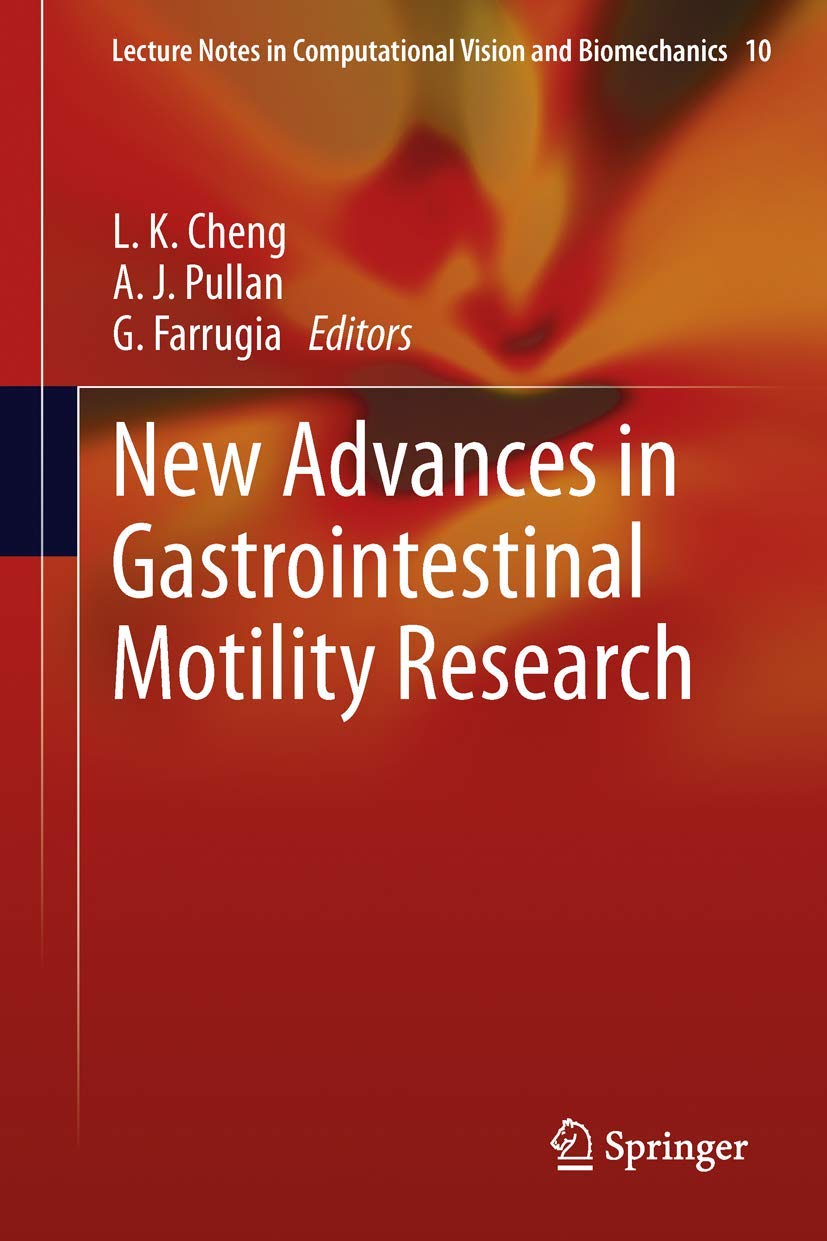
Research into gastrointestinal motility has received renewed interest in part due to recent advances in the techniques for measuring the structure and function of gastrointestinal cells, tissue and organs. The integration of this wealth of data into biophysically based computation models can aid in interpretation of experimental and clinical measurements and the refinement of measurement techniques.
The contents of this book span multiple scales - from cell, tissue, organ, to whole body and is divided into four broad sections covering: i) gastrointestinal cellular activity and tissue structure; (ii) techniques for measuring, analyzing and visualizing high-resolution extra-cellular recordings; (iii) methods for sensing gastroelectrical activity using non-invasive bio-electro-magnetic fields and for modulating the underlying gastric electrical activity, and finally; (iv) methods for assessing manometric and videographic motility patterns and the application of these data for predicting the flow and mixing behavior of luminal contents by using computational fluid dynamic techniques.
This book aims to provide both an overview of historical and existing research techniques as well as to highlight future directions and challenges for the community as a whole. It will be suitable for clinicians to understand the cellular and biophysical underpinnings of gastric emptying, gastroenterologists, surgeons, bioengineers and all scientists with interests in gastrointestinal motility research.
Details:
Visit the L. K. Cheng (Editor), A. J. Pullan (Editor), G. Farrugia (Editor) & 0 more Store
New Advances in Gastrointestinal Motility Research: 10 (Lecture Notes in Computational Vision and Biomechanics, 10)
'%3e%3crect%20x='0.599609'%20width='22.4'%20height='16'%20fill='%230A17A7'/%3e%3cpath%20fill-rule='evenodd'%20clip-rule='evenodd'%20d='M-0.426196%20-1.53223L9.1335%204.91587V-1.06506H14.4668V4.91648L24.0263%20-1.53147L25.2193%200.237148L17.6615%205.33494H23.0002V10.6683H17.6618L25.2187%2015.7655L24.0258%2017.5341L14.4668%2011.0865V17.0683H9.1335V11.0871L-0.425634%2017.5348L-1.61858%2015.7662L5.93947%2010.6683H0.600172V5.33494H5.93977L-1.61914%200.236387L-0.426196%20-1.53223Z'%20fill='white'/%3e%3cpath%20d='M15.5332%205.06615L25.6655%20-1.59961'%20stroke='%23DB1F35'%20stroke-width='0.533333'%20stroke-linecap='round'/%3e%3cpath%20d='M16.6094%2010.9578L25.6924%2017.0801'%20stroke='%23DB1F35'%20stroke-width='0.533333'%20stroke-linecap='round'/%3e%3cpath%20d='M7.00176%205.04727L-2.47266%20-1.33789'%20stroke='%23DB1F35'%20stroke-width='0.533333'%20stroke-linecap='round'/%3e%3cpath%20d='M8.02936%2010.8842L-2.47266%2017.8486'%20stroke='%23DB1F35'%20stroke-width='0.533333'%20stroke-linecap='round'/%3e%3cpath%20fill-rule='evenodd'%20clip-rule='evenodd'%20d='M0.599609%209.6H10.1996V16H13.3996V9.6H22.9996V6.4H13.3996V0H10.1996V6.4H0.599609V9.6Z'%20fill='%23E6273E'/%3e%3c/g%3e%3c/svg%3e) Imported From: United Kingdom
Imported From: United Kingdom
At BOLO, we work hard to ensure the products you receive are new, genuine, and sourced from reputable suppliers.
Every product in the BOLO catalogue is sourced through our Verified Global Supply Network of verified sellers, authorized distributors or directly from the manufacturer.
Each product undergoes thorough inspection and verification at our consolidation and fulfilment centers to ensure it meets our strict authenticity and quality standards before being shipped and delivered to you.
If you ever have concerns regarding the authenticity of a product purchased from us, please contact Bolo Support. We will review your inquiry promptly and, if necessary, provide documentation verifying authenticity or offer a suitable resolution.
Your trust is our top priority, and we are committed to maintaining transparency and integrity in every transaction.
While we strive to display accurate information, variations in packaging, labeling, instructions, or formulation may occasionally occur due to regional differences or supplier updates. For detailed or manufacturer-specific information, please contact the brand directly or reach out to BOLO Support for assistance.
Unless otherwise stated, all prices displayed on the product page include applicable taxes and import duties.
BOLO operates in accordance with the laws and regulations of Bahrain. Any items found to be restricted or prohibited for sale within the Bahrain will be cancelled prior to shipment. We take proactive measures to ensure that only products permitted for sale in Bahrain are listed on our website.
All items are shipped by air, and any products classified as “Dangerous Goods (DG)” under IATA regulations will be removed from the order and cancelled.
All orders are processed manually, and we make every effort to process them promptly once confirmed. Products cancelled due to the above reasons will be permanently removed from listings across the website.
Share with
Or share with link
https://www.bolo.bh/products/K9400765606
Visit the L. K. Cheng (Editor), A. J. Pullan (Editor), G. Farrugia (Editor) & 0 more Store
New Advances in Gastrointestinal Motility Research: 10 (Lecture Notes in Computational Vision and Biomechanics, 10)
Imported From: United Kingdom
At BOLO, we work hard to ensure the products you receive are new, genuine, and sourced from reputable suppliers.
Every product in the BOLO catalogue is sourced through our Verified Global Supply Network of verified sellers, authorized distributors or directly from the manufacturer.
Each product undergoes thorough inspection and verification at our consolidation and fulfilment centers to ensure it meets our strict authenticity and quality standards before being shipped and delivered to you.
If you ever have concerns regarding the authenticity of a product purchased from us, please contact Bolo Support. We will review your inquiry promptly and, if necessary, provide documentation verifying authenticity or offer a suitable resolution.
Your trust is our top priority, and we are committed to maintaining transparency and integrity in every transaction.
While we strive to display accurate information, variations in packaging, labeling, instructions, or formulation may occasionally occur due to regional differences or supplier updates. For detailed or manufacturer-specific information, please contact the brand directly or reach out to BOLO Support for assistance.
Unless otherwise stated, all prices displayed on the product page include applicable taxes and import duties.
BOLO operates in accordance with the laws and regulations of Bahrain. Any items found to be restricted or prohibited for sale within the Bahrain will be cancelled prior to shipment. We take proactive measures to ensure that only products permitted for sale in Bahrain are listed on our website.
All items are shipped by air, and any products classified as “Dangerous Goods (DG)” under IATA regulations will be removed from the order and cancelled.
All orders are processed manually, and we make every effort to process them promptly once confirmed. Products cancelled due to the above reasons will be permanently removed from listings across the website.
Description:
From the Back Cover
Research into gastrointestinal motility has received renewed interest in part due to recent advances in the techniques for measuring the structure and function of gastrointestinal cells, tissue and organs. The integration of this wealth of data into biophysically based computation models can aid in interpretation of experimental and clinical measurements and the refinement of measurement techniques.
The contents of this book span multiple scales - from cell, tissue, organ, to whole body and is divided into four broad sections covering: i) gastrointestinal cellular activity and tissue structure; (ii) techniques for measuring, analyzing and visualizing high-resolution extra-cellular recordings; (iii) methods for sensing gastroelectrical activity using non-invasive bio-electro-magnetic fields and for modulating the underlying gastric electrical activity, and finally; (iv) methods for assessing manometric and videographic motility patterns and the application of these data for predicting the flow and mixing behavior of luminal contents by using computational fluid dynamic techniques.
This book aims to provide both an overview of historical and existing research techniques as well as to highlight future directions and challenges for the community as a whole. It will be suitable for clinicians to understand the cellular and biophysical underpinnings of gastric emptying, gastroenterologists, surgeons, bioengineers and all scientists with interests in gastrointestinal motility research.
Details:
Share with
Or share with link
https://www.bolo.bh/products/K9400765606