Description:
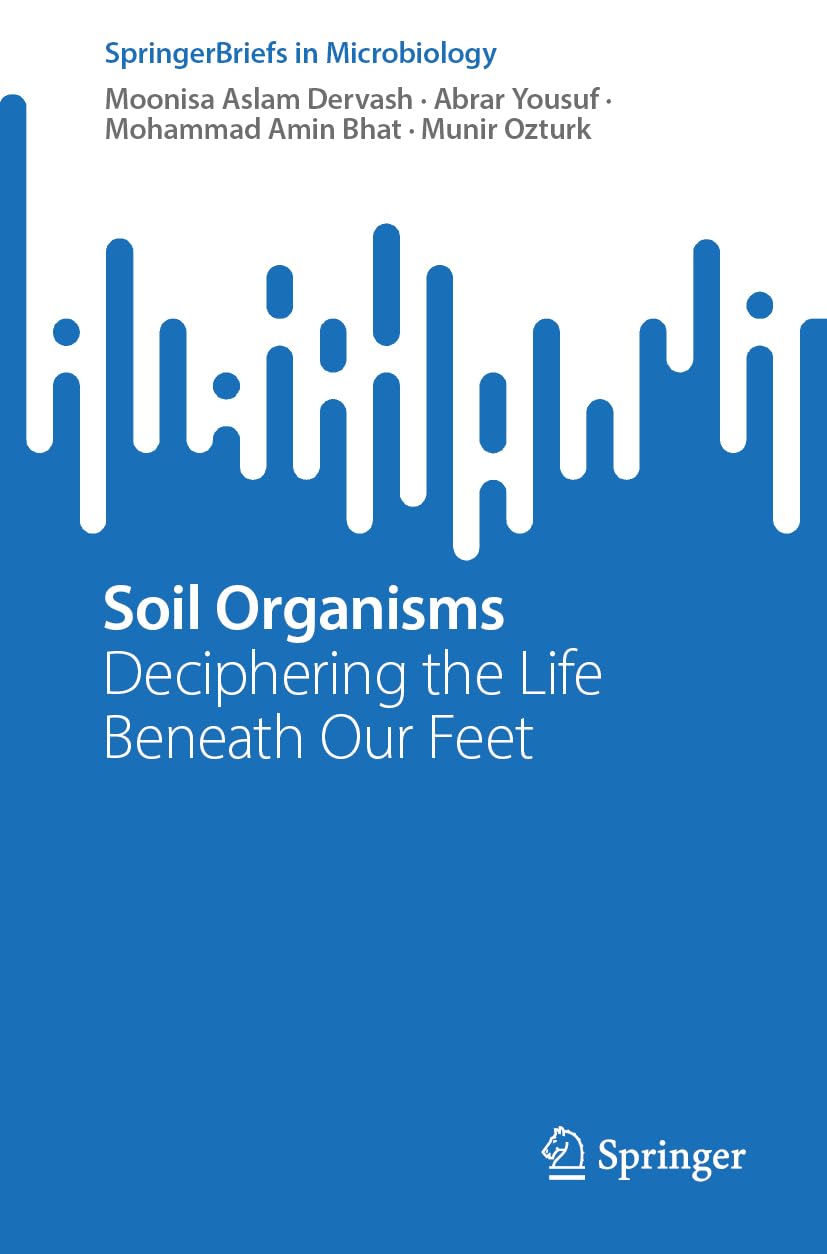
Soil biota is an important and fundamental part of terrestrial ecology. The soil organisms include all those life forms which pass significant proportion of their life within a soil profile. The range of organisms may vary from microscopic entities to a macro level organisms. These organisms are the hidden beauties which take up the task of food chain regulation, organic matter decomposition, and nutrient enrichment of soil. Soil organisms can be grouped into three classes viz; chemical engineers (bacteria,fungi and protozoans), biological regulators (small soil invertebrates like nematodes and mesofauna) and ecosystem engineers (large soil invertebrates and small mammals). These creatures are mainly regulated by certain physical and biological factors. The physicochemical characteristics of soil can determine its biological diversity which influences the regulatory services in an ecosystem.
This book showcases the mechanisms of biological dynamics at micro, meso and macro scales of the soil organisms. The introductory chapters of this book focus on understanding the faunistic diversity and its significance in soil, bioindicators in assessment of soil quality, consequences of various stressors on soil, highlighting the eves and odds associated with agricultural industry vis-à-vis environmental pollution and the possible influences on soil biota. Remaining chapters focus on the fungal internet, ecosystem cybernetics, and the potential remedial technologies for soil conservation, and novel remediation strategies to deal with degraded soils.
From the Back Cover
Soil biota is an important and fundamental part of terrestrial ecology. The soil organisms include all those life forms which pass significant proportion of their life within a soil profile. The range of organisms may vary from microscopic entities to a macro level organisms. These organisms are the hidden beauties which take up the task of food chain regulation, organic matter decomposition, and nutrient enrichment of soil. Soil organisms can be grouped into three classes viz; chemical engineers (bacteria,fungi and protozoans), biological regulators (small soil invertebrates like nematodes and mesofauna) and ecosystem engineers (large soil invertebrates and small mammals). These creatures are mainly regulated by certain physical and biological factors. The physicochemical characteristics of soil can determine its biological diversity which influences the regulatory services in an ecosystem.
This book showcases the mechanisms of biological dynamics at micro, meso and macro scales of the soil organisms. The introductory chapters of this book focus on understanding the faunistic diversity and its significance in soil, bioindicators in assessment of soil quality, consequences of various stressors on soil, highlighting the eves and odds associated with agricultural industry vis-à-vis environmental pollution and the possible influences on soil biota. Remaining chapters focus on the fungal internet, ecosystem cybernetics, and the potential remedial technologies for soil conservation, and novel remediation strategies to deal with degraded soils.
About the Author
Moonisa Aslam Dervash, Ph.D., Post Doc., has obtained her Ph.D. from Division of Environmental Sciences, SKUAST-K, India. Her specialization is in environmental monitoring, environmental awareness, ecology, soil biology, wetland restoration, and carbon sequestration. She has authored 7 books with International publishers, has published more than 60 scientific research articles/book chapters in the journals/books of international reputation. She is recipient of many prestigious awards and felicitations for her dedicated accomplishments. Her focus has remained on many facets of society especially on environmental conservation and women empowerment. She has been felicitated by state government (J & K Department of Ecology. Environment and Remote Sensing) for her outstanding contribution in mass environmental awareness and conservation through electronic media. So far, she has extended nine years of dedicated service towards Environmental Awareness and conservation through a weekly radio programme "Soun Aoundh Pukk" on All India Radio (2015 till date). She was recently awarded Postdoctoral Fellowship by Ministry of Education (ICSSR), Government of India (2022-2024). Currently, she is working in a project on “Identification of potential Rainwater Harvesting sites using Geospatial technologies in Kandi region of Punjab” funded by Science and Engineering Research Board (SERB) at Punjab Agricultural University - Regional Research Station, Ballowal Saunkhri, SBS Nagar, Punjab.
Abrar Yousuf, Ph.D., pursued his Ph.D. from Department of Soil and Water Engineering, Punjab Agricultural University, Ludhiana. Presently, he is working as a Scientist (Soil and Water Engineering) at Punjab Agricultural University - Regional Research Station, Ballowal Saunkhri, SBS Nagar, Punjab. His field of specialization is watershed hydrology, soil erosion modeling, watershed management, remote sensing and GIS, rainwater management, and dryland agriculture. He is involved in continuous monitoring of runoff and sediment yield from various watersheds located in Kandi region of Punjab. He has been involved in several research projects funded by various funding institutes such as; ICAR New Delhi, DST New Delhi, GIZ New Delhi, IPRO consult Germany, Drpartmrnt of Soil and Water Conservation, Govt. Of Punjab and SERB, New Delhi. He is working on ex-situ management of rainwater in farm ponds and its judicious use through micro irrigation systems. He has constructed farm ponds in various adopted villages. Dr. Abrar has authored a number of many research articles in journals of national and international repute, technical bulletins, and two books. He is a member of several scientific associations and actively participates in scientific conferences, workshops, summer and winter schools, training programs for building up high scientific temper and technical skills. Recently, he has been felicitated with “Best Thesis Award” for his doctoral research work by Soil Conservation Society of India, New Delhi.
Dr. Mohammad Amin Bhat, PhD., received his B.Sc (Agriculture) degree from SKUAST-Kashmir and M.Sc and PhD in Soil Science from CCS Haryana Agricultural University, Hisar. He was awarded ICAR-Junior Research Fellowship during Masters’ programme and fellowship from University Grants Commission, New Delhi during doctoral programme. Dr. Bhat is working as Soil Scientist at Regional Research Station, Punjab Agricultural University, Ballowal Saunkhri, Punjab. He has authored/co-authored more than 30 articles in refereed Journals of National and International repute and several technical bulletins, book chapters and popular articles. His field of specialization is soil chemistry and soil fertility. Presently, he is working on soil fertility management under dryland agroecosystems of Northwest India. He is member of various scientific societies and an active participant in conferences, seminars, workshops summer and winter schools. Moreover, he is involved in teaching soil science to undergraduate students at PAU-College of Agriculture, Ballowal Saunkhri, Punjab.
Dr. Munir Ozturk, PhD., D.Sc., received his B.Sc. (Biology-Chemistry) degree from Sri Partap College-Kashmir; M.Sc. from Postgraduate Department of Botany- Jammu & Kashmir University at Hazratbal- Kashmir; PhD and D.Sc. from Ege University, Izmir- Turkiye. He has served at the Ege University-Turkiye for more than 50 years in different positions and has been Founder Director of the Centre for Environmental Studies, Ege University, and Chairman of the Botany Department as well as Director of the Botanical Garden. Sideritis ozturkii and Verbascum ozturkii are 2 newly recorded endemic plant species from Turkiye in his name. His fields of scientific interest are pollution and biomonitoring, plant eco-physiology, biosaline agriculture, and medicinal-aromatic plants conservation. He has published almost 60 books with international publishers; more than 80 book chapters & 200 papers in international journals (120 with impact factor); has presented 125 papers at the international and 85 at the national meetings. Dr. Munir has served as a guest editor for more than 13 international journals and holds many Memberships of “Institutions and Professional Bodies”. He has received fellowships from the globally recognized Alexander von Humboldt Foundation, Japanese Society for Promotion of Science and National Science Foundation of the USA. He has worked as consultant fellow at the Faculty of Forestry, Universiti Putra Malaysia, Malaysia; as Distinguished Visiting Scientist at International Centre for Chemical and Biological Sciences, ICCBS- TWAS, Karachi University, Pakistan; as “Vice President of the Islamic World Academy of Sciences” from 2017 to 2022; and is a “Fellow of the Islamic World Academy of Science” as well as “Foreign Fellow Pakistan Academy of Science.”
Details:
Visit the Springer Store
Soil Organisms: Deciphering the Life Beneath Our Feet (SpringerBriefs in Microbiology)
BHD3975
Quantity:
Order today to get by 7-14 business days
This item qualifies for free delivery
 Imported From: United Kingdom
At BOLO, we work hard to ensure the products you receive are new, genuine, and sourced from reputable suppliers.
Every product in the BOLO catalogue is sourced through our Verified Global Supply Network of verified sellers, authorized distributors or directly from the manufacturer.
Each product undergoes thorough inspection and verification at our consolidation and fulfilment centers to ensure it meets our strict authenticity and quality standards before being shipped and delivered to you.
If you ever have concerns regarding the authenticity of a product purchased from us, please contact Bolo Support. We will review your inquiry promptly and, if necessary, provide documentation verifying authenticity or offer a suitable resolution.
Your trust is our top priority, and we are committed to maintaining transparency and integrity in every transaction.
While we strive to display accurate information, variations in packaging, labeling, instructions, or formulation may occasionally occur due to regional differences or supplier updates. For detailed or manufacturer-specific information, please contact the brand directly or reach out to BOLO Support for assistance.
Unless otherwise stated, all prices displayed on the product page include applicable taxes and import duties.
BOLO operates in accordance with the laws and regulations of Bahrain. Any items found to be restricted or prohibited for sale within the Bahrain will be cancelled prior to shipment. We take proactive measures to ensure that only products permitted for sale in Bahrain are listed on our website.
All items are shipped by air, and any products classified as “Dangerous Goods (DG)” under IATA regulations will be removed from the order and cancelled.
All orders are processed manually, and we make every effort to process them promptly once confirmed. Products cancelled due to the above reasons will be permanently removed from listings across the website.
More from this brand
Similar items from “Soil Science”
Share with
Or share with link
https://www.bolo.bh/products/K303166292K
Visit the Springer Store
Soil Organisms: Deciphering the Life Beneath Our Feet (SpringerBriefs in Microbiology)
BHD3975
Quantity:
Order today to get by 7-14 business days
This item qualifies for free delivery
Imported From: United Kingdom
At BOLO, we work hard to ensure the products you receive are new, genuine, and sourced from reputable suppliers.
Every product in the BOLO catalogue is sourced through our Verified Global Supply Network of verified sellers, authorized distributors or directly from the manufacturer.
Each product undergoes thorough inspection and verification at our consolidation and fulfilment centers to ensure it meets our strict authenticity and quality standards before being shipped and delivered to you.
If you ever have concerns regarding the authenticity of a product purchased from us, please contact Bolo Support. We will review your inquiry promptly and, if necessary, provide documentation verifying authenticity or offer a suitable resolution.
Your trust is our top priority, and we are committed to maintaining transparency and integrity in every transaction.
While we strive to display accurate information, variations in packaging, labeling, instructions, or formulation may occasionally occur due to regional differences or supplier updates. For detailed or manufacturer-specific information, please contact the brand directly or reach out to BOLO Support for assistance.
Unless otherwise stated, all prices displayed on the product page include applicable taxes and import duties.
BOLO operates in accordance with the laws and regulations of Bahrain. Any items found to be restricted or prohibited for sale within the Bahrain will be cancelled prior to shipment. We take proactive measures to ensure that only products permitted for sale in Bahrain are listed on our website.
All items are shipped by air, and any products classified as “Dangerous Goods (DG)” under IATA regulations will be removed from the order and cancelled.
All orders are processed manually, and we make every effort to process them promptly once confirmed. Products cancelled due to the above reasons will be permanently removed from listings across the website.
Description:
Soil biota is an important and fundamental part of terrestrial ecology. The soil organisms include all those life forms which pass significant proportion of their life within a soil profile. The range of organisms may vary from microscopic entities to a macro level organisms. These organisms are the hidden beauties which take up the task of food chain regulation, organic matter decomposition, and nutrient enrichment of soil. Soil organisms can be grouped into three classes viz; chemical engineers (bacteria,fungi and protozoans), biological regulators (small soil invertebrates like nematodes and mesofauna) and ecosystem engineers (large soil invertebrates and small mammals). These creatures are mainly regulated by certain physical and biological factors. The physicochemical characteristics of soil can determine its biological diversity which influences the regulatory services in an ecosystem.
This book showcases the mechanisms of biological dynamics at micro, meso and macro scales of the soil organisms. The introductory chapters of this book focus on understanding the faunistic diversity and its significance in soil, bioindicators in assessment of soil quality, consequences of various stressors on soil, highlighting the eves and odds associated with agricultural industry vis-à-vis environmental pollution and the possible influences on soil biota. Remaining chapters focus on the fungal internet, ecosystem cybernetics, and the potential remedial technologies for soil conservation, and novel remediation strategies to deal with degraded soils.
From the Back Cover
Soil biota is an important and fundamental part of terrestrial ecology. The soil organisms include all those life forms which pass significant proportion of their life within a soil profile. The range of organisms may vary from microscopic entities to a macro level organisms. These organisms are the hidden beauties which take up the task of food chain regulation, organic matter decomposition, and nutrient enrichment of soil. Soil organisms can be grouped into three classes viz; chemical engineers (bacteria,fungi and protozoans), biological regulators (small soil invertebrates like nematodes and mesofauna) and ecosystem engineers (large soil invertebrates and small mammals). These creatures are mainly regulated by certain physical and biological factors. The physicochemical characteristics of soil can determine its biological diversity which influences the regulatory services in an ecosystem.
This book showcases the mechanisms of biological dynamics at micro, meso and macro scales of the soil organisms. The introductory chapters of this book focus on understanding the faunistic diversity and its significance in soil, bioindicators in assessment of soil quality, consequences of various stressors on soil, highlighting the eves and odds associated with agricultural industry vis-à-vis environmental pollution and the possible influences on soil biota. Remaining chapters focus on the fungal internet, ecosystem cybernetics, and the potential remedial technologies for soil conservation, and novel remediation strategies to deal with degraded soils.
About the Author
Moonisa Aslam Dervash, Ph.D., Post Doc., has obtained her Ph.D. from Division of Environmental Sciences, SKUAST-K, India. Her specialization is in environmental monitoring, environmental awareness, ecology, soil biology, wetland restoration, and carbon sequestration. She has authored 7 books with International publishers, has published more than 60 scientific research articles/book chapters in the journals/books of international reputation. She is recipient of many prestigious awards and felicitations for her dedicated accomplishments. Her focus has remained on many facets of society especially on environmental conservation and women empowerment. She has been felicitated by state government (J & K Department of Ecology. Environment and Remote Sensing) for her outstanding contribution in mass environmental awareness and conservation through electronic media. So far, she has extended nine years of dedicated service towards Environmental Awareness and conservation through a weekly radio programme "Soun Aoundh Pukk" on All India Radio (2015 till date). She was recently awarded Postdoctoral Fellowship by Ministry of Education (ICSSR), Government of India (2022-2024). Currently, she is working in a project on “Identification of potential Rainwater Harvesting sites using Geospatial technologies in Kandi region of Punjab” funded by Science and Engineering Research Board (SERB) at Punjab Agricultural University - Regional Research Station, Ballowal Saunkhri, SBS Nagar, Punjab.
Abrar Yousuf, Ph.D., pursued his Ph.D. from Department of Soil and Water Engineering, Punjab Agricultural University, Ludhiana. Presently, he is working as a Scientist (Soil and Water Engineering) at Punjab Agricultural University - Regional Research Station, Ballowal Saunkhri, SBS Nagar, Punjab. His field of specialization is watershed hydrology, soil erosion modeling, watershed management, remote sensing and GIS, rainwater management, and dryland agriculture. He is involved in continuous monitoring of runoff and sediment yield from various watersheds located in Kandi region of Punjab. He has been involved in several research projects funded by various funding institutes such as; ICAR New Delhi, DST New Delhi, GIZ New Delhi, IPRO consult Germany, Drpartmrnt of Soil and Water Conservation, Govt. Of Punjab and SERB, New Delhi. He is working on ex-situ management of rainwater in farm ponds and its judicious use through micro irrigation systems. He has constructed farm ponds in various adopted villages. Dr. Abrar has authored a number of many research articles in journals of national and international repute, technical bulletins, and two books. He is a member of several scientific associations and actively participates in scientific conferences, workshops, summer and winter schools, training programs for building up high scientific temper and technical skills. Recently, he has been felicitated with “Best Thesis Award” for his doctoral research work by Soil Conservation Society of India, New Delhi.
Dr. Mohammad Amin Bhat, PhD., received his B.Sc (Agriculture) degree from SKUAST-Kashmir and M.Sc and PhD in Soil Science from CCS Haryana Agricultural University, Hisar. He was awarded ICAR-Junior Research Fellowship during Masters’ programme and fellowship from University Grants Commission, New Delhi during doctoral programme. Dr. Bhat is working as Soil Scientist at Regional Research Station, Punjab Agricultural University, Ballowal Saunkhri, Punjab. He has authored/co-authored more than 30 articles in refereed Journals of National and International repute and several technical bulletins, book chapters and popular articles. His field of specialization is soil chemistry and soil fertility. Presently, he is working on soil fertility management under dryland agroecosystems of Northwest India. He is member of various scientific societies and an active participant in conferences, seminars, workshops summer and winter schools. Moreover, he is involved in teaching soil science to undergraduate students at PAU-College of Agriculture, Ballowal Saunkhri, Punjab.
Dr. Munir Ozturk, PhD., D.Sc., received his B.Sc. (Biology-Chemistry) degree from Sri Partap College-Kashmir; M.Sc. from Postgraduate Department of Botany- Jammu & Kashmir University at Hazratbal- Kashmir; PhD and D.Sc. from Ege University, Izmir- Turkiye. He has served at the Ege University-Turkiye for more than 50 years in different positions and has been Founder Director of the Centre for Environmental Studies, Ege University, and Chairman of the Botany Department as well as Director of the Botanical Garden. Sideritis ozturkii and Verbascum ozturkii are 2 newly recorded endemic plant species from Turkiye in his name. His fields of scientific interest are pollution and biomonitoring, plant eco-physiology, biosaline agriculture, and medicinal-aromatic plants conservation. He has published almost 60 books with international publishers; more than 80 book chapters & 200 papers in international journals (120 with impact factor); has presented 125 papers at the international and 85 at the national meetings. Dr. Munir has served as a guest editor for more than 13 international journals and holds many Memberships of “Institutions and Professional Bodies”. He has received fellowships from the globally recognized Alexander von Humboldt Foundation, Japanese Society for Promotion of Science and National Science Foundation of the USA. He has worked as consultant fellow at the Faculty of Forestry, Universiti Putra Malaysia, Malaysia; as Distinguished Visiting Scientist at International Centre for Chemical and Biological Sciences, ICCBS- TWAS, Karachi University, Pakistan; as “Vice President of the Islamic World Academy of Sciences” from 2017 to 2022; and is a “Fellow of the Islamic World Academy of Science” as well as “Foreign Fellow Pakistan Academy of Science.”
Details:
More from this brand
Similar items from “Soil Science”
Share with
Or share with link
https://www.bolo.bh/products/K303166292K