Description:
- How to write a thank-you note
- The proper way to handle an online bully
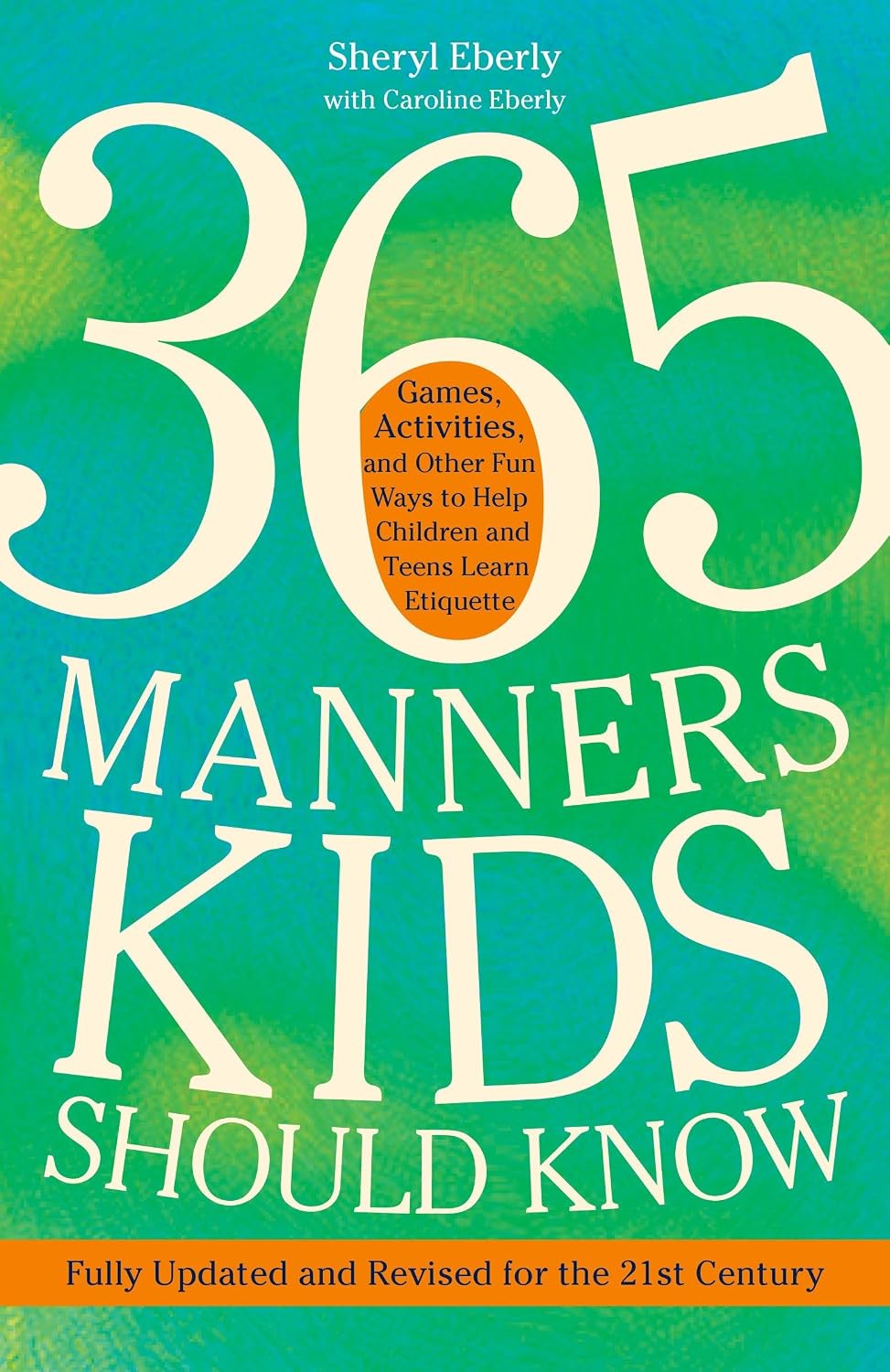
- How to behave at events like birthday parties, weddings, and religious services Full of role-playing exercises, games, and other activities that adults can do with children, 365 Manners Kids Should Know explains not only what manners to teach, but also how--and at what ages--to present them.
Review
About the Author
Excerpt. © Reprinted by permission. All rights reserved.
Learning good manners will help your child act toward others with respect and take into account their feelings. Your child will also gain the confidence that comes from knowing the proper thing to do. As a parent, you're sure to discover it's a gradual process. While your children will put into practice a few good manners, you'll need to remind them often of others. Start with the basics, and enjoy the journey together!
January 1
How early should you start teaching manners?
Parents begin teaching manners by example as soon as a child is born. While our children might do what we say, they are more likely to do what we do. First-time parents may find it shocking to hear their child spout an off-color phrase she learned from a parent. Whether we like it or not, learning usually takes place in the home, through imitation.
It's a good idea to teach your child one new chore each year. If a child learns to make a bed at age three, at age four he can begin emptying the wastebaskets, and by five start to set or clear the table. Try a similar approach with manners. Teach your child a few manners--and when he's mastered those, start on a few more. Lay a foundation and begin to build on it. Expect basic manners from a five-year-old, and more from a ten-year-old. You'll be amazed how many compliments you'll get by the time your child reaches adolescence.
A three-year-old should:
- Establish eye contact when speaking to another.
- Say hello.
- Wash hands before and after a meal.
- Stay seated during the meal.
- Use utensils at the table.
- Say "please" and "thank you."
A ten-year-old should:
- Be able to hold a conversation with an adult.
- Use good table manners.
- Answer the telephone properly and take careful messages.
- Show self-control in public places.
- Take responsibility for keeping the bedroom neat.
- Stand when an adult enters the room.
- Know how to be on time.
A fifteen-year-old should:
- Initiate conversation and show interest with adults.
- Pick up after herself and her friends at home.
- Maintain a noise level that is acceptable to the family.
- Be protective and kind toward younger siblings.
- Express appreciation to parents and others.
January 2
There's no place like home
Some families are on their best behavior when they go out but like to kick back at home. They also let this philosophy govern their manners. Sarah Ferguson, the duchess of York, once told a reporter about her formula for good manners at the table. She and her daughters have A, B, and C manners, she explained. When they're dining with the queen at Buckingham Palace, they use their very best A manners. When they're at a restaurant, they're more relaxed, so they use their B manners. And at home? They're even less proper; C manners are fine.
Contrast Fergie's philosophy with pre-Civil War Eliza Farrar's. "Would it not be more refined and honest," she wrote in The Young Ladies Friend (1834), "to live a little better every day and make less a parade before company?"
There may be some value in being relaxed at home, but at what cost? One of your goals as a parent is for good manners to become habits for your child. If chewing with his mouth closed is necessary when he's out but not when he's at home, chances are he won't chew properly at home or when he's out. Having different codes of manners can be confusing to your child and not very practical in the long run. It's a bit like telling a pianist that how he plays at home doesn't matter as long as he performs well at a recital.
Parents can save themselves some headaches and teach children that the family deserves to see their best behavior. Here are a few ways parents can encourage children to help make home a nice place to be. Suggest that they:
1. Talk to their parents. Say "good morning" and "good night."
2. Respect the privacy of others. Don't listen in on phone conversations, read others' mail, or snoop in their closets.
3. Knock gently on a closed door before entering.
4. Use good table manners.
5. Borrow items only if they've asked to do so. Return them in good condition.
6. Spend time with their siblings. Don't hibernate in the bedroom.
7. Ask family members how things are going.
8. Use an "indoor voice" when they're in the house.
9. Pick up after themselves.
10. Don't let their goodbyes be accompanied by unkind words.
Activity
Post the above list on your refrigerator and compliment your child when he puts one of the rules into practice. If your child likes to create things on the computer, have him design the list for the fridge.
January 3
"Please," "thank you," and "I'm sorry"
Sometimes a child's good manners reveal a naturally sunny, kind disposition. This isn't always the case, but practicing good manners helps a child begin to develop consideration for others.
By following good manners in daily life, we learn to control ourselves and become aware of how our actions and words affect others. At some point, with enough practice, the learned formalities become second nature.
This is certainly the case with saying "please," "thank you," and "I'm sorry."
As soon as a child is able to extend a chubby little hand and ask for a cookie, you should encourage him to say "please." As soon as he is old enough to be given a gift, prompt him to say "thank you." As soon as he can offend another person, "I'm sorry" should become part of his vocabulary. Your child may still believe he's the center of the universe, but his words should reveal a person who cares for other's feelings.
"Please" should be part of every request. Insist that your child say, "May I please have a drink?" If the child is very young, "Drink, please" is okay.
"Thank you" should always acknowledge receipt of an item, favor, or kindness. Children should use it when they are handed a cookie, when they've been given a gift, or when they've visited someone's home.
"I'm sorry" (not "I didn't mean to!"): These two words can calm rough tempers, smooth hurt feelings, and give everyone a fresh start. Children should say this when they break something, make another child cry, or forget to do a chore, for example.
Activity
Use the prompt-and-praise method for reinforcing the use of the kind words in this lesson. Prompt your child in private about when to say "please" and "thank you." Praise him in private after he puts your suggestions into action. Also, always say "I'm sorry" to your child when you're wrong about something.
January 4
Apologizing
Children should be encouraged to make "please" and "thank you" a daily part of their vocabulary. But two other small but powerful words belong there, too: "I'm sorry."
When a child inadvertently bumps into another child in the hall at school, "I'm sorry" is the right thing to say. When she realizes she's taken a second brownie before someone else has had a first, "I'm sorry" helps her appear polite. When your child is late, forgets to bring her uniform, or lets her pet dig in the neighbor's garden, "I'm sorry" shows she can take responsibility for her actions. Little offenses stay little when they are acknowledged and apologized for. When nothing is said, they could ruin a friendship.
At times an apology needs to be written. Your child doesn't need to apologize in writing for small offenses if she's had a chance to apologize verbally, and she shouldn't apologize too much or if she's done nothing wrong.
But if your child breaks something or betrays a friend by revealing a secret, a short note of apology can accompany the replacement of the broken item or a bag of candy for the wounded friend. A note of apology might look like this:
Dear Alicia,
I am so sorry I told Kelsie that you're getting glasses. You told me to keep it a secret and I went and blabbed it anyway. I know you're worried about what it will be like and I only made matters worse. Please forgive me. You're my best friend and I feel terrible that I hurt your feelings.
Jenna
Activity
Tell your child about a time that you apologized to someone. Explain how you felt and how things worked out.
Details:
Visit the Three Rivers Press Store
365 Manners Kids Should Know: Games, Activities, and Other Fun Ways to Help Children and Teens Learn Etiquette
BHD1178
Quantity:
Order today to get by 7-14 business days
Delivery fee of BHD 2. Free for orders above BHD 20.
 Imported From: United Kingdom
At BOLO, we work hard to ensure the products you receive are new, genuine, and sourced from reputable suppliers.
Every product in the BOLO catalogue is sourced through our Verified Global Supply Network of verified sellers, authorized distributors or directly from the manufacturer.
Each product undergoes thorough inspection and verification at our consolidation and fulfilment centers to ensure it meets our strict authenticity and quality standards before being shipped and delivered to you.
If you ever have concerns regarding the authenticity of a product purchased from us, please contact Bolo Support. We will review your inquiry promptly and, if necessary, provide documentation verifying authenticity or offer a suitable resolution.
Your trust is our top priority, and we are committed to maintaining transparency and integrity in every transaction.
While we strive to display accurate information, variations in packaging, labeling, instructions, or formulation may occasionally occur due to regional differences or supplier updates. For detailed or manufacturer-specific information, please contact the brand directly or reach out to BOLO Support for assistance.
Unless otherwise stated, all prices displayed on the product page include applicable taxes and import duties.
BOLO operates in accordance with the laws and regulations of Bahrain. Any items found to be restricted or prohibited for sale within the Bahrain will be cancelled prior to shipment. We take proactive measures to ensure that only products permitted for sale in Bahrain are listed on our website.
All items are shipped by air, and any products classified as “Dangerous Goods (DG)” under IATA regulations will be removed from the order and cancelled.
All orders are processed manually, and we make every effort to process them promptly once confirmed. Products cancelled due to the above reasons will be permanently removed from listings across the website.
Similar suggestions by Bolo
More from this brand
Similar items from “Adolescents”
Share with
Or share with link
https://www.bolo.bh/products/K0307888258
Visit the Three Rivers Press Store
365 Manners Kids Should Know: Games, Activities, and Other Fun Ways to Help Children and Teens Learn Etiquette
BHD1178
Quantity:
Order today to get by 7-14 business days
Delivery fee of BHD 2. Free for orders above BHD 20.
Imported From: United Kingdom
At BOLO, we work hard to ensure the products you receive are new, genuine, and sourced from reputable suppliers.
Every product in the BOLO catalogue is sourced through our Verified Global Supply Network of verified sellers, authorized distributors or directly from the manufacturer.
Each product undergoes thorough inspection and verification at our consolidation and fulfilment centers to ensure it meets our strict authenticity and quality standards before being shipped and delivered to you.
If you ever have concerns regarding the authenticity of a product purchased from us, please contact Bolo Support. We will review your inquiry promptly and, if necessary, provide documentation verifying authenticity or offer a suitable resolution.
Your trust is our top priority, and we are committed to maintaining transparency and integrity in every transaction.
While we strive to display accurate information, variations in packaging, labeling, instructions, or formulation may occasionally occur due to regional differences or supplier updates. For detailed or manufacturer-specific information, please contact the brand directly or reach out to BOLO Support for assistance.
Unless otherwise stated, all prices displayed on the product page include applicable taxes and import duties.
BOLO operates in accordance with the laws and regulations of Bahrain. Any items found to be restricted or prohibited for sale within the Bahrain will be cancelled prior to shipment. We take proactive measures to ensure that only products permitted for sale in Bahrain are listed on our website.
All items are shipped by air, and any products classified as “Dangerous Goods (DG)” under IATA regulations will be removed from the order and cancelled.
All orders are processed manually, and we make every effort to process them promptly once confirmed. Products cancelled due to the above reasons will be permanently removed from listings across the website.
Description:
- How to write a thank-you note
- The proper way to handle an online bully
- How to behave at events like birthday parties, weddings, and religious services Full of role-playing exercises, games, and other activities that adults can do with children, 365 Manners Kids Should Know explains not only what manners to teach, but also how--and at what ages--to present them.
Review
About the Author
Excerpt. © Reprinted by permission. All rights reserved.
Learning good manners will help your child act toward others with respect and take into account their feelings. Your child will also gain the confidence that comes from knowing the proper thing to do. As a parent, you're sure to discover it's a gradual process. While your children will put into practice a few good manners, you'll need to remind them often of others. Start with the basics, and enjoy the journey together!
January 1
How early should you start teaching manners?
Parents begin teaching manners by example as soon as a child is born. While our children might do what we say, they are more likely to do what we do. First-time parents may find it shocking to hear their child spout an off-color phrase she learned from a parent. Whether we like it or not, learning usually takes place in the home, through imitation.
It's a good idea to teach your child one new chore each year. If a child learns to make a bed at age three, at age four he can begin emptying the wastebaskets, and by five start to set or clear the table. Try a similar approach with manners. Teach your child a few manners--and when he's mastered those, start on a few more. Lay a foundation and begin to build on it. Expect basic manners from a five-year-old, and more from a ten-year-old. You'll be amazed how many compliments you'll get by the time your child reaches adolescence.
A three-year-old should:
- Establish eye contact when speaking to another.
- Say hello.
- Wash hands before and after a meal.
- Stay seated during the meal.
- Use utensils at the table.
- Say "please" and "thank you."
A ten-year-old should:
- Be able to hold a conversation with an adult.
- Use good table manners.
- Answer the telephone properly and take careful messages.
- Show self-control in public places.
- Take responsibility for keeping the bedroom neat.
- Stand when an adult enters the room.
- Know how to be on time.
A fifteen-year-old should:
- Initiate conversation and show interest with adults.
- Pick up after herself and her friends at home.
- Maintain a noise level that is acceptable to the family.
- Be protective and kind toward younger siblings.
- Express appreciation to parents and others.
January 2
There's no place like home
Some families are on their best behavior when they go out but like to kick back at home. They also let this philosophy govern their manners. Sarah Ferguson, the duchess of York, once told a reporter about her formula for good manners at the table. She and her daughters have A, B, and C manners, she explained. When they're dining with the queen at Buckingham Palace, they use their very best A manners. When they're at a restaurant, they're more relaxed, so they use their B manners. And at home? They're even less proper; C manners are fine.
Contrast Fergie's philosophy with pre-Civil War Eliza Farrar's. "Would it not be more refined and honest," she wrote in The Young Ladies Friend (1834), "to live a little better every day and make less a parade before company?"
There may be some value in being relaxed at home, but at what cost? One of your goals as a parent is for good manners to become habits for your child. If chewing with his mouth closed is necessary when he's out but not when he's at home, chances are he won't chew properly at home or when he's out. Having different codes of manners can be confusing to your child and not very practical in the long run. It's a bit like telling a pianist that how he plays at home doesn't matter as long as he performs well at a recital.
Parents can save themselves some headaches and teach children that the family deserves to see their best behavior. Here are a few ways parents can encourage children to help make home a nice place to be. Suggest that they:
1. Talk to their parents. Say "good morning" and "good night."
2. Respect the privacy of others. Don't listen in on phone conversations, read others' mail, or snoop in their closets.
3. Knock gently on a closed door before entering.
4. Use good table manners.
5. Borrow items only if they've asked to do so. Return them in good condition.
6. Spend time with their siblings. Don't hibernate in the bedroom.
7. Ask family members how things are going.
8. Use an "indoor voice" when they're in the house.
9. Pick up after themselves.
10. Don't let their goodbyes be accompanied by unkind words.
Activity
Post the above list on your refrigerator and compliment your child when he puts one of the rules into practice. If your child likes to create things on the computer, have him design the list for the fridge.
January 3
"Please," "thank you," and "I'm sorry"
Sometimes a child's good manners reveal a naturally sunny, kind disposition. This isn't always the case, but practicing good manners helps a child begin to develop consideration for others.
By following good manners in daily life, we learn to control ourselves and become aware of how our actions and words affect others. At some point, with enough practice, the learned formalities become second nature.
This is certainly the case with saying "please," "thank you," and "I'm sorry."
As soon as a child is able to extend a chubby little hand and ask for a cookie, you should encourage him to say "please." As soon as he is old enough to be given a gift, prompt him to say "thank you." As soon as he can offend another person, "I'm sorry" should become part of his vocabulary. Your child may still believe he's the center of the universe, but his words should reveal a person who cares for other's feelings.
"Please" should be part of every request. Insist that your child say, "May I please have a drink?" If the child is very young, "Drink, please" is okay.
"Thank you" should always acknowledge receipt of an item, favor, or kindness. Children should use it when they are handed a cookie, when they've been given a gift, or when they've visited someone's home.
"I'm sorry" (not "I didn't mean to!"): These two words can calm rough tempers, smooth hurt feelings, and give everyone a fresh start. Children should say this when they break something, make another child cry, or forget to do a chore, for example.
Activity
Use the prompt-and-praise method for reinforcing the use of the kind words in this lesson. Prompt your child in private about when to say "please" and "thank you." Praise him in private after he puts your suggestions into action. Also, always say "I'm sorry" to your child when you're wrong about something.
January 4
Apologizing
Children should be encouraged to make "please" and "thank you" a daily part of their vocabulary. But two other small but powerful words belong there, too: "I'm sorry."
When a child inadvertently bumps into another child in the hall at school, "I'm sorry" is the right thing to say. When she realizes she's taken a second brownie before someone else has had a first, "I'm sorry" helps her appear polite. When your child is late, forgets to bring her uniform, or lets her pet dig in the neighbor's garden, "I'm sorry" shows she can take responsibility for her actions. Little offenses stay little when they are acknowledged and apologized for. When nothing is said, they could ruin a friendship.
At times an apology needs to be written. Your child doesn't need to apologize in writing for small offenses if she's had a chance to apologize verbally, and she shouldn't apologize too much or if she's done nothing wrong.
But if your child breaks something or betrays a friend by revealing a secret, a short note of apology can accompany the replacement of the broken item or a bag of candy for the wounded friend. A note of apology might look like this:
Dear Alicia,
I am so sorry I told Kelsie that you're getting glasses. You told me to keep it a secret and I went and blabbed it anyway. I know you're worried about what it will be like and I only made matters worse. Please forgive me. You're my best friend and I feel terrible that I hurt your feelings.
Jenna
Activity
Tell your child about a time that you apologized to someone. Explain how you felt and how things worked out.
Details:
Similar suggestions by Bolo
More from this brand
Similar items from “Adolescents”
Share with
Or share with link
https://www.bolo.bh/products/K0307888258